Opinion Article - (2025) Volume 26, Issue 1
Metabolic Balance: Coordinating Digestion and Blood Sugar Control
Sofia Mendes*
Department of Physiology and Metabolic Research, Lisbon Medical University, Lisbon, Portugal
*Correspondence:
Sofia Mendes, Department of Physiology and Metabolic Research, Lisbon Medical University, Lisbon,
Portugal,
Email:
Received: 29-Jan-2025, Manuscript No. IPP-25-23018;
Editor assigned: 31-Jan-2025, Pre QC No. IPP-25-23018;
Reviewed: 14-Feb-2025, QC No. IPP-25-23018;
Revised: 22-Feb-2025, Manuscript No. IPP-25-23018;
Published:
28-Feb-2025, DOI: 10.36648/1590-8577.26.1.908
Description
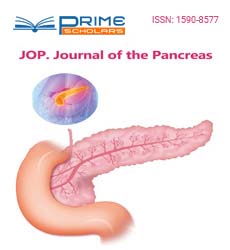
The pancreas is a compact yet indispensable organ that plays a vital role in both digestion and energy regulation. Located deep within the abdominal cavity behind the stomach, it interacts with several organs including the liver, gallbladder and small intestine. Its dual functionality allows the body to efficiently extract nutrients from food while simultaneously managing blood glucose levels. Despite its small size the pancreas has a remarkable capacity for maintaining internal balance and disturbances to its function can lead to profound health issues. Anatomically the pancreas consists of three main sections the head, body and tail. The head is nestled within the curve of the duodenum, the body stretches across the midline behind the stomach and the tail extends toward the spleen. Its structure allows it to perform dual roles efficiently. The exocrine tissue makes up the majority of the organ and is responsible for producing digestive enzymes while the endocrine tissue consisting of the islets of Langerhans manages hormone secretion and blood sugar regulation. This combination of systems enables the pancreas to operate as both a digestive and metabolic center simultaneously.
The exocrine portion of the pancreas secretes enzymes such as amylase, lipase and proteases into the small intestine. These enzymes facilitate the breakdown of carbohydrates, fats and proteins, transforming them into forms that the body can absorb and use. The process is carefully coordinated with food intake as the pancreas releases enzymes in response to hormonal signals from the stomach and intestines. A disruption in this system such as from chronic inflammation or blockage of the pancreatic ducts can lead to malabsorption, nutrient deficiencies and weight loss. Maintaining the exocrine function of the pancreas is therefore critical for proper digestion and nutrient uptake. The endocrine section is equally essential. The islets of Langerhans contain several types of hormone-producing cells including beta cells that release insulin and alpha cells that produce glucagon. Insulin lowers blood sugar by promoting glucose uptake in cells while glucagon increases blood sugar by signaling the liver to release stored glucose. Delta cells secrete somatostatin which helps maintain balance between insulin and glucagon secretion. Together these hormones keep blood glucose levels within a narrow healthy range ensuring that tissues receive adequate energy. Failure of this regulatory system can result in conditions such as diabetes which has widespread impacts on organs including the eyes, kidneys, heart and nervous system.
Pancreatitis, a condition where the pancreas becomes inflamed, highlights the sensitivity of this organ. It occurs when digestive enzymes activate within the pancreas itself damaging tissue. Gallstones, alcohol consumption and certain medications are common triggers. While acute pancreatitis may resolve with medical treatment, repeated episodes can lead to chronic pancreatitis causing long-term digestive enzyme insufficiency and potential diabetes. Preventive measures include limiting alcohol intake, maintaining a healthy diet and managing underlying gallbladder issues. Pancreatic cancer is another serious concern often detected only after it has progressed due to subtle early symptoms. Advanced disease can manifest as abdominal pain, jaundice, unexplained weight loss and fatigue. Risk factors include smoking, obesity, chronic pancreatitis and inherited genetic mutations. Research efforts continue to improve early detection through imaging technologies and molecular testing while treatment strategies combine surgery, chemotherapy and innovative therapies aimed at prolonging survival. Awareness and risk management remain essential for reducing the impact of this disease.
Emerging research into the pancreas also emphasizes its regenerative potential. Scientists are exploring ways to stimulate insulin-producing cell growth and developing artificial pancreas devices that automatically regulate blood glucose. Studies on diet, gut microbiota and metabolic interactions are also revealing strategies to optimize pancreatic health and prevent disease. These developments suggest that proactive care combined with medical innovation can greatly improve the management of pancreatic disorders in the future. Lifestyle factors play a crucial role in supporting pancreatic function. Diets rich in whole grains, fiber, lean proteins and unsaturated fats promote enzyme efficiency and hormonal balance. Regular physical activity enhances insulin sensitivity reducing the strain on beta cells. Avoiding smoking and limiting alcohol intake reduces inflammation and cancer risk while staying hydrated ensures optimal digestive enzyme transport. Even small consistent habits contribute to long-term preservation of pancreatic health. The pancreas exemplifies the body’s ability to coordinate complex systems in a single organ. Through its digestive and hormonal activities, it connects food intake with energy regulation supporting overall physiological stability.
Citation: Mendes S (2025) Metabolic Balance: Coordinating Digestion and Blood Sugar Control. J Pancreas. 26:908
Copyright: This is an open access article distributed under the terms of the Creative Commons Attribution License, which permits unrestricted use, distribution, and reproduction in any medium, provided the original work is properly cited.