Opinion Article - (2025) Volume 26, Issue 1
Balancing Enzymes and Hormones in the Body’s Vital Metabolic Work
Matteo Rinaldi*
Department of Medical Physiology, Verona Health Sciences University, Verona, Italy
*Correspondence:
Matteo Rinaldi, Department of Medical Physiology, Verona Health Sciences University, Verona,
Italy,
Email:
Received: 29-Jan-2025, Manuscript No. IPP-25-23016;
Editor assigned: 31-Jan-2025, Pre QC No. IPP-25-23016;
Reviewed: 14-Feb-2025, QC No. IPP-25-23016;
Revised: 22-Feb-2025, Manuscript No. IPP-25-23016;
Published:
28-Feb-2025, DOI: 10.36648/1590-8577.26.1.906
Description
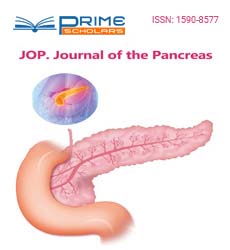
The pancreas is one of the body’s most remarkable organs balancing two contrasting yet interdependent biological systems within a single structure. Tucked behind the stomach and lying adjacent to the duodenum, it operates silently but continuously ensuring that both digestion and metabolism proceed efficiently. Its importance becomes clear only when its function is compromised as even minor disturbances can lead to significant metabolic and digestive disorders. Anatomically, the pancreas stretches across the upper abdomen measuring around fifteen to twenty centimeters in length. It is divided into three sections: The head which nestles in the curve of the duodenum, the body which crosses the midline behind the stomach, and the tail which reaches toward the spleen. This unique positioning allows it to connect with several vital organs and to discharge its secretions directly into the small intestine, making it a hub of biochemical activity.
The pancreas performs two essential roles through its exocrine and endocrine components. The exocrine part forming the bulk of the organ produces and secretes digestive enzymes. These enzymes are synthesized by clusters of acinar cells which release their products into a system of ducts that merge into the main pancreatic duct. Eventually, this duct joins the common bile duct and empties into the duodenum. Once there, the enzymes become active and assist in the breakdown of proteins, fats and carbohydrates. Without this function the human body would be unable to absorb nutrients effectively leading to malnutrition despite adequate food intake. The endocrine section though smaller in size plays a vital metabolic role. Each islet houses several types of hormone-producing cells including beta cells that release insulin, alpha cells that secrete glucagon and delta cells that produce cells. Together these hormones maintain stable blood glucose levels, a critical factor for proper brain function and energy supply. Insulin promotes glucose uptake into cells reducing blood sugar levels while glucagon triggers the release of glucose from the liver when energy demands rise. The coordination between these two hormones ensures that the body has a constant energy supply regardless of dietary fluctuations.
Disruption of these systems can lead to severe diseases. Diabetes mellitus remains the most well-known condition linked to pancreatic dysfunction. In first case diabetes the immune system attacks and destroys insulin-producing beta cells resulting in absolute insulin deficiency. Patients must rely on external insulin administration to regulate blood sugar. In second case diabetes on the other hand results from reduced tissue sensitivity to insulin. This resistance forces the pancreas to produce more insulin until it becomes exhausted leading to high blood glucose levels. Both cases of diabetes if uncontrolled can cause complications affecting the eyes, kidneys and cardiovascular system. Preventive strategies focus on balanced nutrition, regular exercise and weight management to reduce the strain on pancreatic cells. Inflammation of the pancreas known as pancreatitis represents another significant health concern. It occurs when digestive enzymes activate prematurely within the pancreas causing tissue injury. Acute pancreatitis can result from gallstones, excessive alcohol consumption or certain medications. While most cases resolve with medical treatment, repeated inflammation can progress to chronic pancreatitis where permanent damage develops. Chronic cases often lead to digestive enzyme deficiency resulting in poor absorption and weight loss and may also impair insulin secretion contributing to diabetes. Avoiding alcohol and managing gallbladder health can significantly reduce the risk of recurrence.
A more serious condition associated with the pancreas is cancer. Pancreatic cancer is often diagnosed at a late stage because early symptoms are subtle and non-specific. Common warning signs include persistent abdominal pain, jaundice, unexplained weight loss and fatigue. The location of the tumor within the pancreas often determines the type of symptoms experienced. Risk factors include smoking, obesity, chronic pancreatitis and genetic predisposition. Advances in imaging, molecular diagnostics and surgical techniques are helping improve early detection and treatment outcomes though challenges remain in increasing long-term survival rates. Beyond disease, scientific interest in the pancreas continues to grow especially regarding its regenerative potential. Researchers are studying how to encourage regrowth of insulin-producing cells and exploring artificial pancreas systems that can automatically regulate blood sugar levels. In addition, transplant procedures and the use of stem cells are being evaluated as future treatments for diabetes. Although these developments are still in progress they represent important steps toward improving quality of life for patients affected by pancreatic disorders.
Lifestyle habits play an undeniable role in preserving pancreatic health. A diet rich in fiber, whole grains and unsaturated fats supports both digestive and metabolic efficiency. Consuming plenty of water helps enzyme flow while limiting alcohol and processed foods reduces inflammation risk. Regular exercise improves insulin sensitivity easing the workload on the pancreas. Smoking cessation is also vital as tobacco compounds have been linked to both pancreatitis and pancreatic cancer. Small consistent lifestyle changes can have long-term protective effects preserving this organ’s delicate balance. The pancreas exemplifies how a single organ can manage two vastly different systems digestive and hormonal with remarkable precision. It enables the conversion of food into energy and ensures that this energy is available exactly when needed. Awareness about its structure and function helps in understanding the importance of preventive healthcare and early detection of disease.
Citation: Rinaldi M (2025) Balancing Enzymes and Hormones in the Body’s Vital Metabolic Work. J Pancreas. 26:906
Copyright: This is an open access article distributed under the terms of the Creative Commons Attribution License, which permits unrestricted use, distribution, and reproduction in any medium, provided the original work is properly cited.