Research Article - (2026) Volume 10, Issue 1
To What Extent Does the Variability of the Honey Bee Colony Populations in Region 6 and 7 in 2015 and 2017 Correlate with the Farming Community’s Economic Profitability for Specific Crops?
Carmen Shuler*
Department of Biology, Faculty of Sciences, University of Kinshasa, Kinshasa XI, United States
*Correspondence:
Carmen Shuler, Department of Biology, Faculty of Sciences, University of Kinshasa, Kinshasa XI,
United States,
Email:
Received: 07-Oct-2024, Manuscript No. IPJASLP-24-21706;
Editor assigned: 09-Oct-2024, Pre QC No. IPJASLP-24-21706 (PQ);
Reviewed: 24-Oct-2024, QC No. IPJASLP-24-21706;
Revised: 16-Feb-2026, Manuscript No. IPJASLP-24-21706 (R);
Published:
23-Feb-2026, DOI: 10.36648/2577-0594.10.1.76
Abstract
This study investigates the correlation between honey bee colony population variability and the economic profitability of specific crops in regions 6 and 7 during 2015 and 2017. By analyzing data on bee population trends and agricultural yields, the research explores how fluctuations in pollinator numbers may impact the farming community's economic outcomes. It considers factors such as crop diversity, farming practices, and environmental conditions, seeking to determine whether healthier bee populations correlate with higher profitability for key crops. The findings aim to inform strategies for sustainable farming practices and pollinator conservation.
Keywords
Honey bee populations; Agricultural profitability; Crop pollination; Regional analysis;
Sustainable farming
Introduction
Most people know bees only as tiny, semi-dangerous nuisances. These insects however, have an integral role in vegetation growth. If you consume organic matter on land to survive, then bees deserve your appreciation.
There are over 20,000 different species of bees known to man and, while their ability to inflict pain is notable, this diverse animal community’s benefits to the environment and humans alike overwhelm their other attributes. Most of the known bee species on this planet are stingless, having a bigger impact when it comes to agricultural production, pollinating up to a third of United States crops (Student Conservation Association). Unfortunately, over the years, strange and unpredictable fluctuations in the honey bee colony population have led to drastic changes in crop stability. Bees have an incredible impact on the environment and the fact that their populations are rapidly fluctuating not only helps reveal the environmental shifts but also represents a certain amount of the compounded resulting impacts on the economy worldwide. In this study, I will be answering the question, “To what extent does the variability of the honey bee colony populations in region 6 and 7 in 2015 and in 2017 correlate with the farming community’s economic profitability for specific crops?”.
Materials and Methods
The Role of Bees
Bees have existed for around 120 million years originating from carnivorous wasps (Museum of the Earth). Their existence coincided with the dinosaurs for approximately 35 million years, eventually surviving a mass extinction (Dyer). It was at this point that the originating population branched off into numerous different bee species. Surviving on Earth for such a prolonged period has allowed for a multitude of evolutions resulting in the highly diverse population of bee species on Earth today. Of the 20,000 bee species, only 4,000 contribute to plant pollination (U.S. Geological Survey Communications and Publishing). Bees as a whole account for more than 80% of the pollination needed to keep the plants growing and producing. Pollination is the distribution of pollen grains from the flower’s anther (male) to the flower’s stigma (female) to reproduce, leading to the next generation of their species (Forest Service Department of Agriculture). Bees become pollinators as flecks of pollen detach themselves from the bees when they are flying from flower to flower obtaining pollen and nectar for their nutritional value successfully cross-pollinating nearby plants. While their pollination is accidental, that by no means diminishes its importance. Specifically, for this study, since there are tens of thousands of different species of bees and thousands of subcategories that are all pollinators themselves, I have decided to focus my research on the Apis, or honey bee, genus.
Many available studies as well as their integral role in pollination led me to identify them as the particular species I would pursue.
A bee’s role in the ecosystem is important just like any other animal’s, specifically due to the interconnected populations of plants and animals. One way of observing this relationship is through food webs. Food webs are a concept that explains how different food chains interact and the way any small change in a participating plant or animal can impact the rest of the ecosystems. For example, in a woodland food web, the oak leaves, berry bushes, and flowering shrubs are producers; the caterpillars, rabbits, and mice are primary consumers; and the foxes, sparrows, and falcons are the secondary or tertiary consumers. This web explaining environmental interactions is intricately balanced and unique for every biome. The way that the world is created to interact with other parts helps to promote stability, but what happens if a key impacting element diminishes the productivity of the base of the web, shifting a biome away from its equilibrium? Essentially, the honey bee loss would lead to an unstable foundation of producers and would negatively affect the rest of the plantdependent consumers. This chain reaction is expanded upon because honey bees are known as keystone species. Keystone species are informally titled plants or animals that are vital to the health and continuation of their individual ecosystem (National Geographic Society). Their loss would alter or in some cases completely destroy the present ecosystem. Honey bees maintain their whole system: By pollinating the plants, making habitats and even being a source of food for certain animals.
Referred to as mutualists, a subcategory of the keystone species, bees are the anchor in a food supply and act as consumers in the food system expanding their influence (Kunkel and Downey). When they disappear, so do the plants due to the lack of pollination, and consequently, the animal and human populations are affected. This is an excellent reason why the unfortunate population shifts of any one part of the environment, compounded by the keystone species status of honey bees, means troubling results for a multitude of other species. The carefully obtained balance in nature can be disrupted by natural occurrences and human-made ones resulting in massive, unexpected consequences.
Causes for Population Changes
There are multiple factors causing honey bee population shifts making this problem a challenging thing to manage. Some of the many reasons for bee population decline include insecticides, parasites, and disorders along with climate change, and habitat loss [1,2].
Insecticides are types of pesticides that are chemical substances used to kill insects. Many farmers use them to keep away crop-damaging bugs. However, when the bee pollinators are doing their job, they end up also harmed by these measures. In an effort to help minimize the effects on honey bees, farmers have decreased the exposure times, altered application methods and regulated the mixture of compounds allowed in these insecticides (Environmental Protection Agency). Additional colony health stressors include parasites and diseases. The United States Varroa mites are some of the worst disruptors to the honey bee colonies. Varroa mites are parasites that feed on bee larvae and adult bees, many times leaving them seriously malformed or dead (Hawaii Department of Agriculture). These mites are currently the number one cause of losses to the honey bee population. However, from 2006-2013, colony collapse disorder was a major issue. Colony collapse disorder, or CCD is “the phenomenon that occurs when the majority of worker (adult) bees in a colony disappear and leave behind a queen, plenty of food, and a few nurse bees to care for the remaining immature bees and the queen” (U.S. environmental protection agency). This strange occurrence is marked by the additional fact that there are very few dead bee bodies near the hive. A colony can’t survive if the adult bees leave for too extended a period and there is no one to support the colony with more nutrients. It is unknown what causes this disorder, and it has been attributed possibly to pesticides brought to colonies, diseases spread amongst bees, simply natural, environmental shifts or even, at one point, cell phone towers’ interruption (Agricultural research service) [3]. This was a frightening time for many farmers as anywhere from 30 to 90 percent of their honey bees were suddenly lost with no clear reason as to why. The minimally understood syndrome plaguing hives was made exponentially worse as farmers had no recourse. In 2006, scientists and farmers feared CCD would become a long-term threat and disrupt our economic balance, but, while it hasn’t disappeared, it has greatly decreased as an impacting factor of bee populations.
Within the branch of climate change, temperature fluctuation and alterations to precipitation patterns have had adverse effects on honey bees. Both droughts and floods result in increased habitat loss and a decline in populations as a whole.
Without sufficient shelter, their populations cannot sustain themselves and they end up disbanding or just disappearing altogether. The disappearance of individual bee hives some years has been extremely high and oftentimes a mystery. The climate’s increased temperatures in the summer and quick fluxes in the winter months have also led to abundant hive deaths worldwide. Another population effector is deforestation and forest fires, contributing to habitat losses and consequential colony decreases. These quick environmental and human-led shifts have compounded the loss of habitat for honey bees and decreased their populations.
There are many factors contributing to the honey bee’s demise but a surprising influx of concerned media portrayals has helped to inform the public on damaging practices. Besides, new regulations and legislation put in place to minimize insecticide use and decrease the harmful spreading of diseases/parasites, increased awareness and informative materials have influenced farmers and others to add honey bee hives in their backyards restoring the lost colonies. Over time, the increases have begun to outweigh the losses [4].
Like everything, changes in nature have adverse effects on other parts of the world. The factors affecting the honey bee population are too numerous to be fully explained above so I chose to only include the key factors that have a direct effect on hive health and stability. The shifts in honey bee populations before the improvements in practices had consequently pushed the whole ecosystem from equilibrium. The resulting impact on humans was poor, not to mention damaging to the economy. I suspect there will be a correlation between pollination fees and the changing bee populations. My goal is to find evidence that helps to explain whether or not and how much the declining bee populations have impacted economic states and agricultural prices.
Results and Discussion
Number of Honey Bee Colonies over the Years
I observed the honey bee colony numbers over the past 30 years to understand how much they have changed over time. The yearly changes in honey bee populations must be recorded and understood as we pursue full comprehension of the consequences to which the economy is responding.
As Figure 1 helps to show, the present population of honey bees in the United States has been fluctuating for decades. Through the late 90’s and early 2000’s, there was a massive decline in honey bee populations worldwide due to the aforementioned Varroa mites, CCD, and changes in the environment. However, this decreasing slope has begun to improve in more recent years, and the number of colonies overall increased. Figure 1 supports the feeling of ease in farmers and agricultural workers meaning that in the long run, the trend supports that the number of bee colonies will increase which is better for the environment. Despite this improvement, the populations are still shifting rapidly from 2013 to 2018, increasing and decreasing with each year. The number of colonies changing is the same as the honey bee population shifting so the wave-shaped, up-and-down graph suggests that farmers’ focus should be on the short-term colony variations and how they will cope with their changing economic position as the pollinators become more or less available.
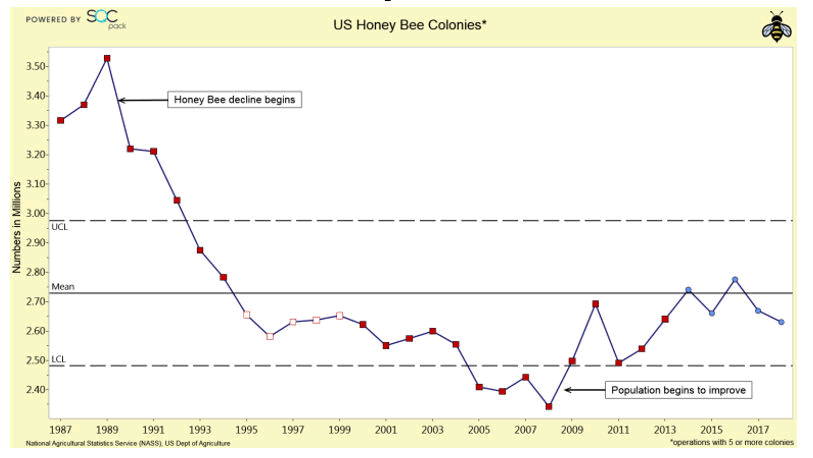
Figure 1: The graph shows the decline and recovery of US honey bee colonies from 1987 to 2017, based on USDA data.
It is well known that the winter is one of the hardest times for bees as there is an increased number of deaths in these months. Beekeepers retain a statistic of acceptable and expected winter colony losses at approximately 15% (Bee Informed Partnership Inc.). In 2006 however, there was a major drop in the honey bee populations and an increase in the winter loss total of more than 30%. Highlighting the visually represented data in the survey of honey bee colonies in the United States from 2006-2010 in Figure 2, there was a drastic difference in winter loss rates and the anticipated losses. Much of this was attributed to human and environmental disruptions, and the worrisome CCD. This disorder has, in recent years, become better understood for its impact on bee health and how important of a factor it is. In 2008, it was responsible for nearly 60 percent of total hives lost; its impact has diminished to about 31 percent in 2013 (U.S. Environmental Protection Agency). As mentioned earlier, CCD has had quite the impact in the past, but presently, it appears to have lessened in importance over time [5].
The difference between the expected population loss and the actual losses decreased from 2013-2014 and continues to lessen as 2017 approaches. A smaller difference in winter loss rates is a good thing meaning that scientific studies of the environment and bees are becoming more precise. The stable estimation of winter losses from 2013 to 2017 also encourages that factors affecting honey bees are becoming more controlled and stabilizing similarly.
As for the total loss of honey bees in the United States, the high number is not stable, meaning the environment is highly affected by the population fluctuations. High numbers and instability, or changing numbers, represent unpredictable future trends and uncertainty for farmers and economists. Both Figures 1 and 2 call attention to the short-term available records around 2013-2017 signaling that these are key years in understanding how the economy and ever-shifting number of honey bee colonies interrelate with one another.
The next step in my research was to observe the direct relationship between honey bee population fluctuations and the resulting changes in farmers’ profitability. From the available resources, I utilized the National Agricultural Statistics Service (NASS) under the United States Department of Agriculture (USDA) (Albert R. Mann Library, Cost of Pollination and Honey Bee Colonies). This website was the best location to find the information and records necessary to obtain comparable numbers. While researching studies, it was important to maintain the context of when the information was recorded. In 2006-2013, there was heightened anxiety about the fact that the honey bee populations were showing constant decreases, therefore many studies from that period suggest the decline will continue along with the previous trend. However, this is not what occurred, after 2013, the bee colonies began to increase or fluctuate, and they broke away from the trend. This has taught a good lesson on context, as what you research has to be looked at in its background and surrounding information to fully understand the perspectives of the time and the information you are working with [6].
Within the USDA website’s records, there were limitations to the years and their correlating data. I used two different secondary data sources within the one website. There were other websites with similar data however, the USDA was the most reliable and credible source available for my level of research. The USDA is a public source database containing vast records of helpful information on pollination costs and colony numbers. Due to collection issues, there was a limitation in the available years, but I chose to look at a spread of data from 2015 and 2017 as it fits perfectly within a range that was also represented in Figures 1 and 2. These were the two compared records when it came to honey bee pollination data. While in recent years, the number of honey bee colonies has increased, from Year 2015 to Year 2017, the number of colonies in the United States decreased. Online records for these years made it possible for me to identify changes in the cost per colony of bees that were used in a specific region, and find correlations between the decreased number of bee colonies and the increased price paid per colony by farmers [7,8].
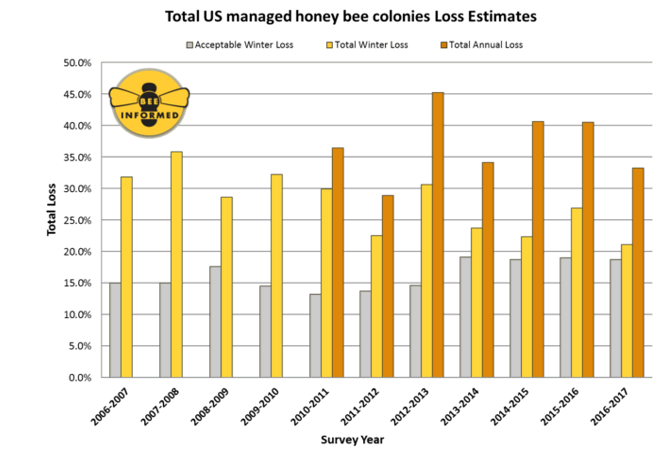
Figure 2: Annual and winter honey bee colony losses in the U.S. from 2006–2017.
The first record collection I utilized from the NASS Albert R. Mann Library was titled “Cost of pollination,” and contained well-organized data from defined regions, for specific years and crops. The second dataset I used was “Honey bee colonies” which provided the number of honey bee colonies in each state of the United States at a quarterly rate per year (January 1, April 1, July 1, and October 1). To maintain specific parameters in my comparison, I concentrated on the years 2015 and 2017. I also narrowed my focus to region 6 and 7 in the dataset which includes California, Hawaii, and Arizona.
This led me to coordinate the data in the “Honey bee colonies” records to align both studies’ numbers. I summed the quarterly data for one year together and divided it by four to get an average number of honey bee colonies in that year. Then, within the “Honey bee colonies” records, to get a region that matches the ‘Region 6 and 7’ for “Cost of pollination,” I added that year’s average number of honey bee colonies for all three individual states. For example, in 2015 in California, the quarterly data was 1,440,000 colonies on January 1st , 1,040,000 colonies on April 1st , 730,000 colonies on July 1st , and 750,000 colonies on October 1st. I averaged these numbers to get 990,000 average colonies in California. After repeating this process for Hawaii and Arizona, I summed the three numbers together to get the region 6 and 7 in 2015 number of honey bee colonies, which was now in the comparable state to look at with the cost of pollination data (Table 1) [9].
| |
Quarter 1
|
Quarter 2
|
Quarter 3
|
Quarter 4
|
Sum of 4 quarters
|
Average
|
|
2015
|
|
California
|
1,440,000
|
1,040,000
|
730,000
|
750,000
|
3,960,000
|
990,000
|
|
Hawaii
|
10,500
|
13,500
|
14,500
|
13,000
|
51,500
|
12,875
|
|
Arizona
|
35,000
|
33,000
|
40,000
|
36,000
|
1,44,000
|
36,000
|
|
Total colonies
|
-
|
-
|
-
|
-
|
-
|
1,038,875
|
|
2017
|
|
California
|
1,170,000
|
980,000
|
590,000
|
680,000
|
3,420,000
|
855,000
|
|
Hawaii
|
13,000
|
12,000
|
15,000
|
15,000
|
55,000
|
13,750
|
|
Arizona
|
31,000
|
22,000
|
26,000
|
27,000
|
106,000
|
26,500
|
|
Total colonies
|
-
|
-
|
-
|
-
|
-
|
895,250
|
Table 1: Quarterly honey bee colony numbers for California, Hawaii, and Arizona in 2015 and 2017, including total annual counts and average colonies per state.
Analysis
Knowing the total colonies of honey bees in 2015 and 2017 meant I then needed to compare them to the cost of pollination for each crop and see how they correlated. In the dataset for “Cost of pollination” I identified a column representing the fees paid by the farmer for a colony of bees, titled “price per colony.” There was cost data available for multiple crops all grown in the region 6 and 7. I compared each crop’s price per colony for 2015 and 2017. I decided to begin analyzing this data by combining (Tables 2 and 3).
| Region 6 and 7 |
2015 |
2017 |
| Number of honey bee colonies |
10,38,875 |
8,95,250 |
| |
Cost per colony ($) |
Cost per colony ($) |
| Almond |
165 |
171 |
| Blueberry |
91.8 |
106 |
| Cherry |
67.6 |
71.3 |
| Alfalfa |
48.8 |
49.3 |
| Apple |
29.4 |
45.3 |
| Cucumber |
36.7 |
40.1 |
| Sunflower |
35.6 |
37.7 |
| Cantaloupe |
45.1 |
44.6 |
| Watermelon |
46.8 |
38.6 |
| Total |
566.8 |
603.9 |
Table 2: There was cost data available for multiple crops all grown in the region 6 and 7.
| |
Cost per colony 2015 ($) |
Cost per colony 2017 ($) |
| Almond |
165 |
171 |
| Blueberry |
91.8 |
106 |
| Cherry |
67.6 |
71.3 |
| Alfalfa |
48.8 |
49.3 |
| Apple |
29.4 |
45.3 |
| Cucumber |
36.7 |
40.1 |
| Sunflower |
35.6 |
37.7 |
| Cantaloupe |
45.1 |
44.6 |
| Watermelon |
46.8 |
38.6 |
| Total |
566.8 |
603.9 |
Table 3: There was cost per colony 2015 and cost per colony 2017.
Table 3 allows me to represent all the key data together. The top displays the number of honey bee colonies as it has decreased from 2015 to 2017, and below that there is the farmer’s cost per colony for a wide spread of different crops.
The column format helps make the correlation more visible between the years, crops and mainly, the number of colonies in region 6 and 7 (Figure 3).
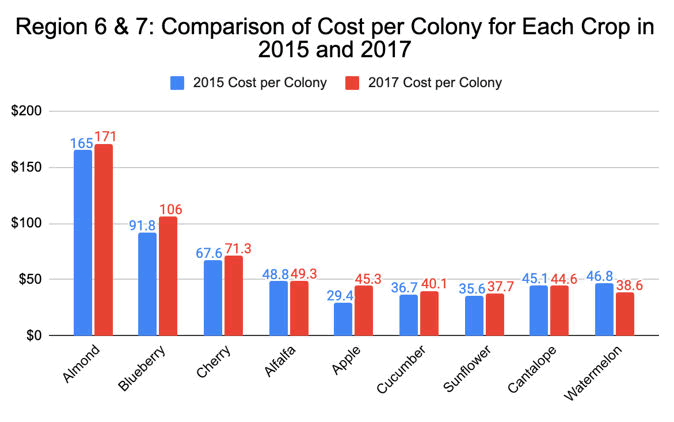
Figure 3: To represent my data in a more visually appealing and comprehensible format, I utilized a bar charting feature on Google Sheets.
Along the horizontal axis, I labeled the crops and on the vertical axis, the cost per colony can be found.
It is important to note that there is not a literal trend when looking at the chart as a whole as the apparent downward slope is not representative of a period of change because the horizontal axis is purely quantitative individual values. I have discrete data shown above, and my use of a bar chart for the exhibition of my data helps that to be clearly understood. It is not the same as a normal function graph and therefore conclusions about broad trends are not represented in its minimal timeframe.
In the above charts, there are observable shifts in the crops in region 6 and 7. The almond, blueberry, cherry, alfalfa, apple, cucumber, and sunflower all show a correlation that from 2015 to 2017, as the number of honey bee colonies in the area decreased, the prices that the farmers had to pay for a colony to pollinate their fields increased. Contrarily, for the cantaloupe and watermelon crops, the cost per colony decreased along with the number of colonies.
Unfortunately, without more research, the cantaloupe and watermelon dissimilar results from the rest of the crops cannot be specified if it is because they are melons and have different agricultural requirements when it comes to pollination, or if they are outlier results due to my specialized research focus. This evidence, approximately 80% of the selected crops, supports the claim that to a large extent there is a given correlation between the number of honey bee’s colonies in an area and the pollination fees consequently affecting the overall farming community economically.
Conclusion
Bees have a crucial role in pollination allowing them to increase biodiversity and stabilize an environment. However, due to diseases, pesticides, habitat loss, and climate change, bee populations have experienced an increased rate of population fluctuations in winter loss numbers. Many responded with concerns about the adverse effects of increased pollination fees due to shortages of available honey bee pollinators that could lead to interruptions of the agricultural products. The Domino effect that occurs from dying bees exponentially branches out to hurt the entire ecosystem biodiversity and increase the cost of food supplies.
I took a systematic approach to answering my research question. First, I explained each portion of my narrowly focused question with concise background information necessary to understand my decisions. Then, I explained the overall impacts on the variable colony numbers in my study. I made key observations by providing a line graph representation of the number of colonies in the United States over 30 years, and a bar graph showing the winter expected and actual losses. After introducing and explaining key information to help with conceptual comprehension, I utilized multiple online statistical records to collect data for my study, merging the key information into my own table. I narrowed my focus to a particular time frame, 2015 and 2017, allowing me to collect data and look for correlations between the colonies in that area for each year and the corresponding cost of pollination for multiple shared regional crops. My results were best represented in a discrete data bar chart helping with visualization of the changes in fees for each crop depending on the number colonies in the area.
Of the crops, 77.7% of them showed an anticipated correlation of increased price per colony when the number of honey bee colonies (2017) decreased in the area. The melons (cantaloupe and watermelon) showed their own opposite correlation which without more information remains an outlier set of data from the majority trend. There was a big change in price per colony for apples and blueberries. This means farmers with those two crops would be at a greater financial disadvantage in 2017 than in 2015 while the same decrease in profitability would occur with almond, cherry, alfalfa, and cucumber farms.
For my research, I chose to analyze the honey bee species because it was the type of bee with the largest multitude of data records available to pursue studies and accumulate data to better understand the correlation between honey bees and economic costs to the farmer. A way to further this method of research would be to look at the differing economic impacts and the change in the population of the species of bees, Osmia lignaria (blue orchard bees) (Burrows et al.). The blue orchard bee has been known to increase the growth of strawberry plants and promote double the yield of sweet cherries. This impressive, loftier impact of blue orchard bees means they have both a better production rate but also a greater effect on the economy if their population has the same fluctuation as other honey bee populations. If data records are made more available for this bee species, the impact could be studied to verify what other bee species influence the same economic factors. More studies could be pursued on the different locations where bees reside, and how new regulation policies in foreign countries affect the same species of bee along with their specific productivity of pollination. Additionally, with the inclusion of more recent data as it is released, we will be able to calculate what we anticipate to be a similar correlation in the opposite direction as the number of colonies increases.
Locations worldwide are affected by reductions in bee habitats, policies on the use of insecticides, and temperature pattern differences. We all hope for stability in these areas if, based on my data, in two years, the honey bee population’s decrease by approximately 13.8% can increase the fee for apple pollination alone by more than 50%. There is an existing correlation between the number of honey bee colonies and the pollination fee to the farmers and consequently their profitability.
Although they may seem insignificant and small, these incredible creatures carry the weight of a global ecosystem on their back. Therefore, our efforts at conservation and endeavors to understand the interactions between humans, plants and animals puts us one step closer to ecosystem equilibrium as well as economic stability.
References
- Agricultural Research Service (2022) ARS honey bee health. USDA Agricultural Research Service.
- Bee Informed Partnership Inc. (2017) Total U.S. managed honey bee colonies loss estimates U.S. climate resilience Toolkit.
- Environmental Protection Agency (2018) Understanding how pesticide exposure affects honey bee colonies. United States Environmental Protection Agency.
- Khoury DS, Myerscough MR, Barron AB (2011) A quantitative model of honey bee colony population dynamics. PloS One. 6(4):e18491.
[Google Scholar] [PubMed]
- Bacandritsos N, Granato A, Budge G, Papanastasiou I, Roinioti E, et al. (2010) Sudden deaths and colony population decline in Greek honey bee colonies. J Invertebr Pathol. 105(3):335-340.
[Crossref] [Google Scholar] [PubMed]
- Ferrier PM, Rucker RR, Thurman WN, Burgett M (2018) Economic effects and responses to changes in honey bee health.
[Crossref] [Google Scholar]
- Goodrich BK, Goodhue RE (2020) Are all colonies created equal? The role of honey bee colony strength in almond pollination contracts. Ecol Econ. 177:106744.
[Crossref] [Google Scholar]
- Warner S, Pokhrel LR, Akula SM, Ubah CS, Richards SL, et al. (2024) A scoping review on the effects of Varroa mite (Varroa destructor) on global honey bee decline. Sci Total Environ. 906:167492.
[Crossref] [Google Scholar] [PubMed]
- Williams NM, Crone EE, T’ai HR, Minckley RL, Packer L, et al. (2010) Ecological and life-history traits predict bee species responses to environmental disturbances. Biol Conserv. 143(10):2280-2291.
[Crossref] [Google Scholar] [PubMed]
Citation: Shuler C (2025) To What Extent Does the Variability of the Honey Bee Colony Populations in Region 6 and 7 in 2015 and
2017 Correlate with The Farming Community’s Economic Profitability for Specific Crops? J Anim Sci Livest Prod. 10:76.
Copyright: © 2025 Shuler C. This is an open-access article distributed under the terms of the Creative Commons Attribution
License, which permits unrestricted use, distribution, and reproduction in any medium, provided the original author and source
are credited.