Research Article - (2025) Volume 12, Issue 1
Security Assessment and Emerging Threats in the Indo-Pacific Region: Strategic Implications and Policy Recommendations
Saka Kunta Kelana Rimba*
Department of Political Science, Udayana University, Bali, Indonesia
*Correspondence:
Saka Kunta Kelana Rimba, Department of Political Science, Udayana University, Bali,
Indonesia,
Email:
Received: 12-Sep-2024, Manuscript No. IPBJR-25-21528;
Editor assigned: 14-Sep-2024, Pre QC No. IPBJR-25-21528 (PQ);
Reviewed: 28-Sep-2024, QC No. IPBJR-25-21528;
Revised: 09-Jan-2025, Manuscript No. IPBJR-25-21528 (R);
Published:
16-Jan-2025, DOI: 10.36648/2394-3718.12.1.137
Abstract
Whisper wave Intelligence is a non-profit organization dedicated to strategic studies and geopolitical analysis. Our mission is to disseminate vital security and threat assessments to the global community by implementing rigorous intelligence practices. We meticulously compile, analyze, and process data from diverse and authoritative sources to create comprehensive reports that inform and guide researchers and decision-makers alike.
The strategic evaluation presented in this report addresses the most direct and significant threats to the Indo-Pacific region over the coming years. It includes a detailed analysis of the economic impacts, strategic outlooks, and potential political solutions to mitigate these threats. The order of topics discussed does not necessarily reflect their relative importance or the magnitude of threats as perceived by the contributing intelligence agencies. All identified threats demand a robust intelligence response, including those where a near-term focus may help prevent greater challenges in the future.
Information available up to the date of this report's preparation has been utilized to ensure the most current and relevant intelligence is reflected in the analysis and recommendations provided herein.
Keywords
Nature-based tourism; Innovation; Sustainable tourism; Business model; Competitiveness
Introduction
Main State Actors
Overview: The Indo-Pacific has emerged as the preeminent global economic and geopolitical hub. This region has become the central stage for the competition between the United States and China to shape the future trajectory of the 21st century.
The territorial disputes in the region, involving China, the Philippines, Vietnam, Malaysia, Brunei, and Taiwan, have long been regarded as a potential flashpoint that could escalate into armed confrontation between the U.S. and China if tensions at sea escalate. Washington has repeatedly asserted that it is obligated to defend the Philippines, its longstanding treaty ally in Asia, in the event of an attack on Filipino forces, including in the South China Sea.
China
China's leadership views the nation as a preeminent regional and global power. The Chinese Communist Party will seek to pre-empt challenges to its standing and legitimacy, undermining U.S. influence, dividing Washington and its partners, and promoting international norms aligned with China's authoritarian system. Notably, the People's Republic will press for Taiwan's unification, a move that will heighten tensions with the United States. Despite economic difficulties, China's leaders will maintain state-directed economic policies to channel resources toward priority industries, decrease reliance on foreign technologies, and facilitate military modernization.
Economic power: China utilizes its economic leverage and informal trade sanctions as primary means of influence. These instruments are employed to coerce individuals, organizations, businesses, and governments into aligning their actions and expressions with Chinese interests [1].
Additionally, Chinese influence agents have escalated their activities in the digital realm, particularly through covert operations on social media and websites. The Chinese influence efforts on Western social media platforms have become increasingly sophisticated.
The PRC combines its economic heft with its growing military power and its diplomatic and technological dominance for a coordinated approach to strengthen CCP rule, secure what it views as its sovereign territory and regional pre-eminence, and pursue global power. In particular, Beijing uses these whole-of government tools to compel others to acquiesce to its preferences, including its assertions of sovereignty over Taiwan.
Military: The Chinese government will prioritize the modernization and enhancement of its national defense capabilities, aiming to develop a world-class military force by 2049. In the interim, the Chinese Communist Party intends to leverage the People's Liberation Army to solidify its claims over what it considers its sovereign territory, bolster its influence in regional matters, and project power globally, particularly by deterring and countering potential U.S. intervention in a Taiwan Strait conflict [2,3].
Intelligence: China will likely further develop its global intelligence operations to support the CCP's goals, confront U.S. national security and international influence, suppress perceived threats to the regime globally, and acquire trade secrets and intellectual property to strengthen its domestic science and technology sectors.
Officials of the PRC intelligence services will try to exploit the ubiquitous technical surveillance environment in China and expand their use of monitoring, data collection, and advanced analytic capabilities against political security targets beyond China's borders. China is rapidly expanding and improving its Al and big data analytics capabilities for intelligence operations.
Taiwan
Taiwan is widely considered the most volatile potential source of conflict between the United States and China. In 1949, the Nationalist Chinese government established an autonomous administration on the island after being driven off the mainland. The Chinese Communist Party therefore views Taiwan as a breakaway province without a legitimate claim to autonomy or independence. Recognizing Beijing as the sole legitimate government of China and severing diplomatic ties with Taipei are prerequisites for any country to forge diplomatic relations with China. As Chinese leaders and officials frequently reiterate, China has never ruled out the use of force against Taiwan. To emphasize this, China's 2005 Anti- Secession Law delineates the circumstances under which China may resort to military action [4,5].
Taiwan occupies a strategically significant position within the economically vital Indo-Pacific region. As articulated by Assistant Secretary of Defense Ely Ratner, Taiwan constitutes a critical juncture in the first island chain, providing a foundation for a network of U.S. allies and partners extending from the Japanese archipelago to the Philippines and into the South China Sea. This geographical positioning is essential to safeguarding regional security and defending America's vital interests in the Indo-Pacific.
The strategic location of Taiwan within the First Island Chain serves as an anchor for the network of U.S. allies and partners in the region, which is critical to the security and defense of vital U.S. interests in the Indo-Pacific.
Military: Taiwan has unveiled a new "force realignment plan" that has already taken effect in 2024, which includes expanding its reserve personnel. According to the International Institute for Strategic Studies' Military Balance 2022 report, the island's active military of 169,000 personnel is currently supported by approximately 1.66 million reservists.
Furthermore, Taiwanese authorities have increased the 2023 national defense budget by nearly 15% from 2022, allocating over $500 billion Taiwanese dollars for enhancements to air and naval combat capabilities. However, whether these measures will significantly deter a potential near-term invasion by China remains uncertain, as the mainland's 2- million-strong armed forces vastly outmatch Taiwan's. Nonetheless, the threat of a costly armed conflict may incentivize Beijing to pursue non-military coercive tactics to bring the island under its control, reflecting the overall complexity of the situation, as noted by Kitsch Liao, assistant director of the Atlantic Council's Global China Hub.
Conflict effects: A Chinese military assault on Taiwan would have severe economic consequences regardless of the conflict's outcome or U.S. involvement. Taiwan's semiconductor industry, which produces nearly 70% of global semiconductors and around 90% of the most advanced chips, is critical to the global economy. The disruption of Taiwan's production capacity would trigger a global economic downturn, as no other entity could immediately replace Taiwan's pivotal role in semiconductor supply chains [6].
Philippines
The international tribunal recognized that the Scarborough Shoal has been a traditional fishing ground for fishermen from various nationalities, including the Philippines, China, Taiwan, and Vietnam. The tribunal acknowledged that the claims of both the Philippines and China to have historically fished in the shoal were "accurate and advanced in good faith." However, the tribunal noted that China had violated its obligation to respect the traditional fishing rights of Filipino fishermen by restricting their access to the shoal after May 2012.
The Scarborough Shoal dispute dates back to a two-month standoff between the Philippines and China twelve years ago. The tension arose when Philippine forces observed Chinese fishermen collecting endangered marine resources, such as giant clams and corals, from the area. Before the Philippine authorities could intervene, Chinese ships blocked their way.
Subsequently, the Philippine Coast Guard reported that Chinese vessels guarded the lagoon, preventing Filipino ships and fishing boats from entering.
The standoff threatened to spill over into trade and tourism, as China tightened regulations on banana imports from the Philippines and several Chinese tour groups reportedly cancelled their visits to the country. Despite the Philippines' historic arbitral victory, Filipino fishermen continue to bear the brunt of the diplomatic row with China. The Scarborough Shoal has recently witnessed tensions, including the China Coast Guard firing water cannons at Philippine civilian vessels on a mission to provide food and fuel to fishermen in the area [7].
Concerns: China may eventually construct an artificial island at the Scarborough Shoal, similar to the structures it has built on submerged reefs in the Spratly Islands, which are equipped with radar, runways, and missile systems. In 2017, a Chinese official overseeing those islands stated that the Scarborough Shoal would be one of several locations where environmental monitoring stations would be established, although China's foreign ministry later denied these plans.
United States
The Indo-Pacific region has been a vital economic interest for US businesses seeking to access natural resources, markets, and labor. China, Japan, and India, which rank among the world's largest economies, are crucial trading partners for the United States. In 2016, the US exported over $200 billion in goods to these three countries and imported more than $600 billion from them, with China alone accounting for approximately one-fifth of all US imports.
The United States is a major power in the Indo-Pacific region, which encompasses the area from the Pacific coastline to the Indian Ocean. This dynamic region is home to more than half of the global population, nearly two-thirds of the world's economic activity, and seven of the largest militaries worldwide. A significant portion of the U.S. military presence is concentrated in the Indo-Pacific, supporting over three million American jobs and attracting nearly $900 billion in foreign direct investment. As the region continues to drive a substantial share of global economic growth in the coming years, its influence and importance to the United States will only increase [8].
The United States' alliances and partnerships in the IndoPacific serve as the foundation for regional prosperity and security. Amid growing tensions and shifting power dynamics, the demand for U.S. engagement, encompassing diplomatic, economic, and military dimensions, continues to rise. In 2021, the CNAS Indo-Pacific Security Program focused on strengthening cooperation with American allies and partners to establish a liberal digital order in the region and mitigate the long-term impacts of the COVID-19 pandemic.
Strategic approach: The United States should place greater emphasis on multilateral coordination with key allies such as Australia, India, and Japan in the Southeast Asian region. Collaborating with allies and partners to engage third-party countries offers several strategic advantages: it allows for the pooling of resources, facilitates a division of labor that capitalizes on the unique strengths and relationships of each ally and partner, counters the influence of the
People's Republic of China in countries where the U.S. has limited direct engagement, and enables the achievement of U.S. objectives without requiring regional countries to explicitly align themselves with the United States.
The United States should enhance its defense cooperation with Indonesia, Malaysia, Thailand, and Vietnam, four nations experiencing increasing Chinese influence. Specific initiatives should include:
• Collaborating with Indonesia to address China's concerning conduct in the Natuna Sea and other areas, as well as reevaluating the legal aspects surrounding the provision of crew lists to Indonesia, which has been a point of contention in the U.S. - Indonesia military relationship [9].
• Strengthening the partnership with Vietnam not only as a key ally, but also to bolster Hanoi's capacity to provide security and counter Chinese influence within its immediate neighborhood, particularly in Cambodia and Laos.
• Additionally, the Department of Defense should establish a minimum requirement to consult and share U.S. engagement goals, plans, and activities in the Indo-Pacific region with Australia, Japan, and India.
Materials and Methods
Challenges
Overview: The security environment in the Indo-Pacific region is characterized by persistent tensions and evolving dynamics. It is crucial to proactively identify and address emerging challenges and trends. Currently, three significant developments can be observed:
• The United States engages in military exercises with numerous Asian nations, though these joint activities are considered less consequential from China's perspective.
• India faces pressure from China in both the Himalayan region and the Indian Ocean, prompting Delhi to bolster its regional military diplomacy as a countermeasure.
• The rivalry between the major powers in the region raises the risk of accidental confrontations. Establishing open communication channels and effective de-escalation mechanisms is necessary to prevent such incidents from escalating into military conflicts. While such mechanisms exist, experts hold varying opinions on their efficacy.
China
Chinese President Xi Jinping's emphasis on safeguarding the Chinese Communist Party's security and political stability appears to be undermining the country's capacity to address complex domestic challenges, thereby impeding the CCP's ambition to elevate China's global influence. China's leadership likely views corruption, demographic disparities, and fiscal and economic difficulties as primary concerns, as these factors significantly impact economic performance and living standards - two critical elements underpinning public support for the government and political stability.
Economics: In the coming years, China's economy is projected to experience a slowdown due to structural impediments and Beijing's reluctance to implement aggressive stimulus measures to drive economic expansion. While Beijing acknowledges these challenges, it is avoiding reforms that would contradict President Xi's emphasis on state-directed investment in manufacturing and industry. A slower Chinese economy would likely depress global commodity prices, erode the export competitiveness of countries that directly compete with China, and dampen overall global growth, though it is improbable that this would curtail Beijing's expenditures on state-prioritized initiatives.
Furthermore, China's decelerating economy could create resource constraints in the long term, compelling the government to prioritize allocations across social issues, industrial policy, military, and overseas lending. President Xi has shifted the focus towards what he deems "high-quality growth," which encompasses greater self-sufficiency in strategic sectors and a more equitable distribution of wealth, departing from the previous emphasis on maximizing GDP growth. Concurrently, Beijing is attempting to mitigate the threat of U.S. sanctions and dissatisfaction with its semiconductor export controls.
Military: China's lack of recent combat experience may diminish the effectiveness and willingness of the People's Liberation Army to engage in military conflict. Additionally, Chinese leaders are likely concerned about the detrimental impact of corruption on the capabilities and trustworthiness of the military, as evidenced by the dismissal of high-ranking officers, including the defense minister, in 2023.
• Invading Taiwan would necessitate an extraordinarily complex military operation for China, requiring the precise coordination of air, land, and naval forces, as well as electronic and cyber capabilities.
• The Taiwan Strait's choppy waters and adverse weather conditions would limit the viability of a seaborne invasion to only a few months per year. Transporting hundreds of thousands of troops across the strait would take weeks and require thousands of ships, each crossing taking hours and exposing the invasion fleet to potential Taiwanese targeting, troop mobilization, and infrastructure defenses.
• China would need to visibly shift military assets to its eastern coast and undertake other preparations that Taiwan and the United States would likely detect. Additionally, concerns remain about China's capacity to field the naval vesselsrequired for a successful invasion, as its amphibious fleet is relatively small, and itsreliance on civilian ships would make the invasion force more vulnerable to Taiwanese missile strikes.
Border: The China-India border dispute has a contentious history, marked by a single war in 1962 that resulted in a defeat for India. However, the ongoing tensions carry the risk of further escalation, which could prove devastating given that both countries possess established nuclear capabilities. Such a conflict would also have significant economic repercussions, as China remains one of India's largest trading partners.
The military standoff is mirrored by growing political tensions, which have strained the relationship between Indian Prime Minister Narendra Modi and Chinese President Xi Jinping. Observers suggest that constructive dialogue is the only viable path forward, as both nations have much to lose from a continued confrontation.
Taiwan
Recent discussions in Taiwan regarding the revival of the cross-strait service trade agreement underscore a fundamental divide between the political parties. Rather than focusing on domestic reforms or exploring new avenues for trade and investment agreements with the EU and US, the Chinese Nationalist Party and Taiwan People's Party are insisting on revisiting an agreement that expired in 2014 during the Sunflower movement. Such an approach risks alienating Taiwan's broad European support base and could lead other allies to question the necessity of their continued backing, if Taiwan appears to be easily reducing tensions with China.
• This policy would not address Taiwan's genuine challenges, but rather increase its economic reliance on China and Chinese investment. The reality is that Taiwan's economic dependence on China inevitably creates risks to its national sovereignty.
• The primary threat to Taiwan's stability stems from domestic challenges. If the Taiwanese people's aspirations for a better quality of life are not met, they pose a significant risk. Currently, the Taiwanese populace perceives that reforms are progressing at an unsatisfactory pace, leading to growing discontent over issues such as low wages, healthcare concerns, and barriers faced by the younger generation in accessing the housing market. Navigating this transformation through effective reforms is a critical balancing act for Taiwan's policymakers.
Industry: Taiwan's industrial landscape is predominantly driven by cost-minimization strategies, with heavy reliance on subcontractors and a tendency to demand lower wages. This model, however, has limited the creation of new industries, and Taiwan's experience with the full product development value chain is constrained. As a result, wages in Taiwan risk stagnation, posing challenges to improving overall social welfare. Relative to China, Singapore, and South Korea, Taiwan's wage levels have fallen behind.
The Democratic Progressive Party government has introduced initiatives targeting emerging sectors like green technology, biotechnology, smart machinery, and the Internet of Things.
Yet, these efforts have faced criticism for being overly unambitious, with some arguing that political interference in industry is undesirable. To address these issues, Taiwan would benefit from enhanced dialogue and potentially the establishment of entirely new industries to break free from outdated economic structures.
• Taiwan's major trading partners including China, the United States, Europe, and Japan hold divergent views on the political status of the self-governing island, but they are united in their shared interest to expand their stake in Taiwan's cutting-edge semiconductor sector.
Security: The military lacked a well-defined strategy to safeguard the nation against a potential Chinese offensive, and the political leadership may have been ill-equipped to comprehend the conceptual underpinnings necessary to counter such a threat.
Taiwan's Reliance on an External Power, the United States, which has committed to supporting Taiwan's self-defense, has long pressured Taipei to reallocate its limited defense budget to more effectively deter a potential Chinese invasion and restructure its inadequately trained reserve forces. However, the implementation of such reforms has progressed slowly and with great difficulty.
• Taiwanese forces must hold the line. Some Chinese forces will always land on the island, Taiwanese ground forces must be able to contain any beachhead and then counterattack forcefully as Chinese logistics weaken. However, the Taiwanese ground forces have severe weaknesses. Therefore, Taiwan must fill its ranks and conduct rigorous, combined arms training. Ground forces must become the center of Taiwan’s defense effort.
Philippines
As the Philippines' premier national intelligence agency, NICA must strike a balance between prioritizing domestic and international intelligence matters, while remaining vigilant about the emerging threat posed by China. By establishing this operational equilibrium, NICA can provide appropriate guidance to policymakers.
Within the Philippines, NICA has struggled to effectively counter Chinese espionage. Reports indicate that Chinese agents have deliberately targeted critical infrastructure of the Philippine Army and Navy, as well as the offices of the Department of Foreign Affairs. The Philippine government's complacency toward Beijing under President Rodrigo Duterte has coincided with an influx of Chinese illegal immigrants, who may pose a range of homeland security risks. Scholars have observed that NICA's foreign intelligence work is less prominent in the public eye compared to its internal security operations, which may contribute to institutional weaknesses that invite external aggression.
Security: Given Taiwan's geographic proximity to the Philippines and the presence of over 150,000 Filipinos residing in Taiwan, any military conflict in the Taiwan Strait would inevitably have ramifications for the Philippines.
As the closest Indo-Pacific ally of the United States among the five in the region, the Philippines has significantly deepened its military cooperation with the U.S. since the inauguration of President Marcos in May last year.
This includes the expansion of U.S. access to four new military bases, one of which is located in Cagayan province, only around 400 kilometers away from Taiwan.
In response, China has sought to deter the Philippines from involvement in the Taiwan issue. In April, the Chinese Ambassador to the Philippines, Huang Xilian, warned that the United States intends to interfere in the Taiwan matter through the newly established sites under the Enhanced Defense Cooperation Agreement.
United States
The strategic competition between the United States and China is multifaceted and encompasses a variety of interrelated domains. According to one study, the U.S. is challenging China in five key areas:
• Control over the Indo-Pacific region
• Trade and the economy
• China's pursuit of alternative technical standards
• Quest for technological supremacy
• China's military advancement
Another study identifies several factors driving this competition, including the pursuit of power and security, status and prestige, economic prosperity, control over resources, territorial or sovereign claims, values and ideology, as well as the ability to shape the international order through rules, norms, and institutions.
A central challenge for U.S. strategists is how to analyze this complex competition, which spans a wide spectrum of issues where the U.S. and China diverge. Similar to the multiplicity of battlegrounds in military conflicts, it may be more productive to deconstruct this competition into its constituent dimensions, recognizing that each subordinate area could involve distinct actors, interactions, and dynamics.
Dependence: The U.S. relies on military maneuvers, The United States' military presence and capabilities in the AsiaPacific region are contingent upon robust cooperation with its regional allies and partners. These core alliances include South Korea, Japan, Australia, the Philippines and Thailand. Moreover, the U.S. is actively seeking to broaden and deepen its cooperative military ties with additional countries in the region. The frequency and scope of joint military exercises can serve as a useful metric for assessing the strength and intimacy of these cooperative security relationships.
Partnerships: To achieve its strategic objectives, China must deepen and cultivate partnerships, expand its military access, and undermine U.S. alliances and partnerships. Although China lacks formal military alliances in Southeast Asia, it actively pursues strong partnerships. There is no definitive hierarchy of China's strategic partnerships, but China categorizes its partners into broad groups to indicate their importance.
China identifies its most significant strategic partners as comprehensive strategic cooperative partners, which in Southeast Asia include Burma, Cambodia, Laos, Thailand, and Vietnam. China is likely to intensify its engagement with these five countries. Another important tier, likely below the previous one, is Comprehensive Strategic Partners, encompassing Indonesia and Malaysia. The Philippines and Singapore can also be considered partners that China is seeking to strengthen its relations with, given the importance China has placed on these countries.
Partners can choose to support the United States, China, or both. Assessing the relative U.S. influence compared to Chinese influence is more relevant than considering U.S. influence in isolation or absolute terms. The focus should be on evaluating the extent to which a partner has more shared interests with the United States than with China, rather than solely examining the partner's shared interests with the United States. Similarly, the United States' comparative ability to incentivize or punish the partner is more crucial to the competition than considering U.S. capabilities in isolation.
Cooperations: Beijing aims to offer the region more substantial economic prospects than the United States. The Regional Comprehensive Economic Partnership and China's extensive investments in infrastructure and connectivity will further integrate the Indo-Pacific into China's economic sphere.
Given China's geographic proximity and its infrastructure projects coupled with lower trade barriers, regional countries will find it more convenient and cost-effective to conduct trade and investment with China rather than the United States. Even if countries are apprehensive about Chinese influence, they stand to gain significantly from economic cooperation with Beijing, and it is in their best interest to maintain robust economic ties with China.
Despite the United States' superior military power and capabilities compared to China, China perceives obstacles in converting American military power into regional influence.
• Firstly, as noted previously, China believes that Southeast Asian nations prioritize economic development over external security concerns, rendering the U.S. ability to aid these countries with their external security a less pressing issue for them.
• Secondly, Chinese sources suggest that Southeast Asian countries are wary of the reliability of U.S. regional security efforts and prefer to maintain some distance in order to best safeguard their own interests and manage both the United States and China.
This equidistance between the two powers shields these countries from the risks associated with aligning too closely with either side. Furthermore, Chinese experts assess that the U.S. "America first" and "reciprocity" policies could lead Washington to impose conditional requirements on its allies and partners, potentially making U.S. support and assistance less certain and more contingent. While Japan, Australia, and India have expressed interest in cooperating with the United States in a quadrilateral framework, India has refrained from allowing Australia to participate in its Malabar naval exercises, fearing the potential backlash from China.
Results and Discussion
Strategic Assessment
Numerous organizations have conducted wargames to examine the dynamics of a potential U.S.-China conflict over Taiwan. However, these wargames have tended to focus more on issues of escalation and geopolitics, rather than on analyzing the potential military operational outcomes.
There remains disagreement over whether a defense of Taiwan could be successful. Any policy discussion on this matter must begin by establishing baseline assumptions about the potential outcomes, against which any changes can be measured. The nature of this policy discussion will depend heavily on these baseline assumptions. For instance, the policy implications would differ significantly depending on whether China could quickly seize control of Taiwan, or if Taiwan could hold out for an extended period while the U.S. and its allies deploy additional forces.
Grand Strategic Assumptions
The principal combatants: China, Taiwan, the United States, and Japan:
China: China's strategic calculus assumes that it will launch a preemptive invasion of Taiwan, leveraging the element of surprise by gradually ramping up military exercises in preceding years to create uncertainty about the timing of the actual attack.
Taiwan: Taiwan is expected to resist the Chinese assault vigorously, despite its relatively limited military spending compared to China and the United States.
However, the project recognizes the unpredictability of Taiwanese morale, as some nations have capitulated soon after an invasion while others have fought fiercely against long odds. The base case assumes that Taiwan will resist to the maximum of its capabilities, but this is an assumption, as immediate Taiwanese surrender would effectively preclude the need for a wargame analysis.
United states: The United States is expected to intervene immediately, based on its longstanding ties to Taiwan and policy of opposing unilateral changes to the status quo in the Taiwan Strait. While the United States has not formally treaty obligations to defend Taiwan, it has historically defended the autonomy of other nations and has not ruled out the use of force to protect Taiwan. The lack of a substantial U.S. military presence on Taiwan at the outset of the conflict is recognized, as the United States has not stationed significant forces on the island since the 1970’s. Deploying more U.S. troops to Taiwan could provide a casus belli for China, potentially undermining efforts at a peaceful resolution.
Japan: Japan's role is crucial, as it hosts the majority of U.S. military bases andpersonnel in the region, providing a critical staging ground for the U.S. response to a Chinese invasion of Taiwan. The proximity of these Japanese bases to Taiwan, and the lack of viable alternatives, makes them a central element of the U.S. strategy in the event of a conflict. Recent suggestions indicate that Japan may participate to some extent in defending Taiwan. Japan has developed a robust military capability, with military expenditures significantly exceeding those of other Asian nations aside from China and South Korea. The Japan Self-Defense Forces have undertaken overseas deployments for disaster relief and humanitarian efforts since the Heisei era.
Moreover, Japan's latest Defense White Paper expresses grave concern over China's growing military power, air incursions, and naval activities in the region, including within Japan and the broader international community.
Other allies, partners, and adversaries
A potential U.S.-China conflict would have far-reaching global implications. The high stakes and extensive economic ramifications of such a conflict would elicit reactions from countries worldwide. This section outlines the baseline assumptions and alternative scenarios regarding the involvement of other nations
India and Australia: India and Australia can collaborate to bolster the military capabilities of third countries in the IndoPacific, such as Fiji, Papua New Guinea, Timor Leste, Sri Lanka, and the Maldives. This can involve supporting their participation in UN peacekeeping missions, conducting joint humanitarian assistance and disaster relief exercises, providing maritime training, combating piracy, and monitoring illegal, unreported, and unregulated fishing. The two countries can also establish joint maritime domain awareness initiatives and supply defense equipment like guard ships and frigates to ASEAN nations like Indonesia and the Philippines.
India and Australia's strategic partnership is crucial for maintaining the balance of power in the dynamic Indo-Pacific region, as they both seek to address the challenges posed by the rise of assertive powers, particularly China. By strengthening their defense cooperation through joint military exercises like Malabar and AUSINDEX, the two countries are enhancing their security and promoting regional stability. Their collaboration extends beyond traditional security measures, encompassing projects to improve cybersecurity, maritime domain awareness, and the capabilities of smaller regional states. This collective approach helps ensure that no single power can dominate the Indo-Pacific, fostering an environment conducive to peace, security, and long-term prosperity.
India and Australia works together within the Quad framework to safeguard the sovereignty and security of IndoPacific countries, opposing actions that undermine regional stability.
Quad structure: The quadrilateral security dialogue consists of the United States, Japan, and three other nations. This framework facilitates enhanced cooperation and a united front against regional threats. Both India and Australia seek to safeguard maritime trade routes and combat terrorism and piracy, enabling them to collaborate on maritime security, intelligence sharing, and disaster response.
Moreover, India's strategic location in the Indian Ocean and Australia's advanced military capabilities and training facilities present additional avenues for the two countries to develop a more robust and comprehensive security architecture. As China's assertiveness increases, the evolving geopolitical landscape provides India and Australia an impetus to strengthen their partnership and play a pivotal role in preserving peace and stability in the Indo-Pacific region.
NATO and Europe: The European nations have been cautious about directly involving themselves in the geopolitical rivalry between the United States and China. China's substantial economic clout, coupled with the lack of European territories in the Pacific region, has motivated Europe to prioritize maintaining constructive ties with China.
None of the European countries are so deeply entrenched in Pacific affairs that they would perceive China as an imminent threat warranting automatic participation in a potential conflict that could escalate into a third world war with the risk of nuclear involvement. However, Europe also remains wary of China's authoritarian tendencies and is committed to preserving the liberal international order. While the United States has engaged NATO and the European Union in its efforts to constrain China's influence, and has achieved some success in this regard, it is likely that most European nations would limit their involvement to the imposition of economic sanctions on China.
Early Conflict Breakout Scenario
Once hostilities commence, Chinese air and naval forces encircled the island. The resulting Chinese defensive perimeter was so dense that no cargo ships could penetrate it, and the danger to airlift aircraft was extreme.
• In one simulated scenario, an attempt to deploy a U.S. Army brigade to Taiwan by air resulted in two of the three battalions being destroyed in transit. The U.S. Maritime Prepositioning Ships squadron, designed for the rapid deployment of large ground formations, was unable to reach the island. Taiwan was thus isolated, and the United States could not move significant forces onto the island within the timeframe of the simulation.
The Chinese were consistently able to deploy troops to Taiwan. The Taiwan Strait's narrow width, the numerical superiority of Chinese forces, and the limited Taiwanese defenses made it infeasible to repel the invasion at sea. The Chinese challenge lay in sustaining the forces landed on the island while bringing in reinforcements before the Taiwanese could contain the beachhead and mount a counterattack. U.S. attacks on China's amphibious shipping imposed a time constraint on the Chinese invasion, but once China captured an operational port or airfield, it could utilize civilian merchant ships and cargo aircraft to supply the invasion, reducing the demands on the amphibious fleet.
The central question was whether Chinese forces could capture and maintain control of airfields and ports before U.S., Japanese, and Taiwanese attacks sank their amphibious ships. In the baseline scenario and most others, this was not achieved.
The Chinese augmented the beach assault with airborne forces, but these attempts to seize airfields generally failed due to the limited combat power of airborne troops, a pattern consistent with the mixed results of German and Russian airborne operations.
• When the airborne forces succeeded in isolating the battle area, they assisted the Chinese amphibious forces in establishing a substantial beachhead.
• With a limited ability to project substantial firepower in the early stages, China's capacity to advance from the beaches and secure a larger lodgment depended heavily on air power, both for close air support of attacking forces and the critical interdiction role of destroying bridges and overpasses that could be used by Taiwanese reinforcements to bolster the defenses around the beachhead.
Economic Influence Central to Competition
A concern exists that China's growing economic involvement in the region, including investments in infrastructure, could potentially limit U.S. military activities and access. For instance, the Chinese e-commerce company Alibaba is investing in a "Smart Digital Hub" through Thailand's Eastern Economic Corridor initiative, which aims to attract investment in infrastructure and digital e-commerce. Alibaba plans to construct its Smart Digital Hub near the U-Tapao Rayong Pattaya International Airport, intending to establish a regional logistics hub and customs platform for its operations (Figure 1). Leveraging its close ties with the Chinese government, Alibaba could conceivably request in the not-too-distant future that the U.S. Air Force curtail or cease operations from the U-Tapao Royal Thai Navy Airfield, citing "inappropriate military activities near a civilian economic transit hub."
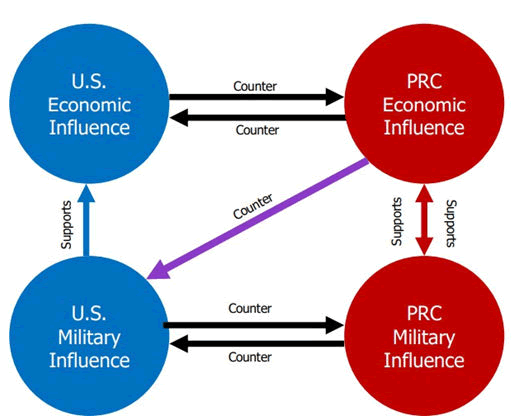
Figure 1: Directionality of U.S. and PRC economic and military influence.
The figure above examines how the United States and China employ economic and military capabilities, illustrating the symmetric and asymmetric methods by which China leverages its economic might to its strategic advantage. China utilizes its economic influence to compete with the United States' economic sway. Furthermore, Beijing capitalizes on its economic weight to asymmetrically diminish or constrain U.S. military influence.
The United States appears to employ its economic and military capabilities in a balanced manner. There is no indication that partner countries perceive U.S. military influence as a counterweight to China's economic influence.
Possible Economic Outcomes
According to a report by Standard Chartered, China is expected to overtake the United States as the world's largest economy, and India is likely to join China as one of the top global economies by 2030.
The bank predicts that Asia's GDP will account for around 35% of the world's total GDP by 2030, up from 28% last year and 20% in 2010.
This would be on par with the combined economic output of the eurozone and the United States. Additionally, the bank forecasts that six of the 10 largest economies could be located in Asia by the year 2030 (Figure 2).
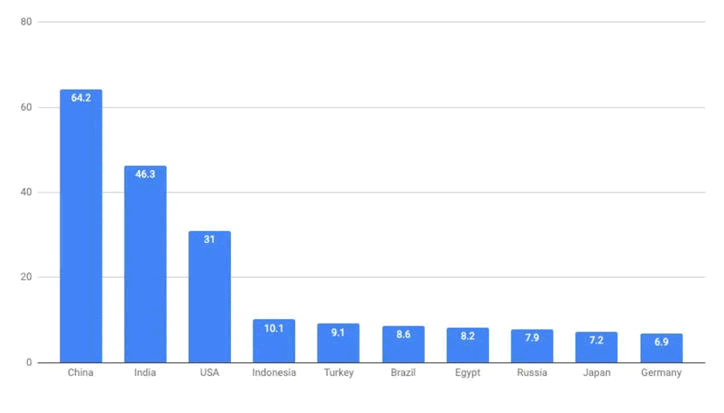
Figure 2: World's biggest economies by 2030 (trillions of international $ in purchasing power parity measures).
• Conflict between Beijing and Washington will be catalyst for closer ties within region, Asean+3 Macroeconomic Research Office forecasts.
• ASEAN’s investment in China set to rise to US$200 billion over next 17 years.
According to a regional think tank, Chinese investment in ASEAN countries is projected to surpass US$500 billion by 2035, more than tripling from current levels. The ongoing USChina trade tensions are anticipated to serve as a catalyst for this significant increase in Chinese investment across the region.
Conflict impact: A Chinese assault on Taiwan, regardless of the outcome or U.S. involvement, would precipitate a global economic recession and erase trillions of dollars from worldwide economic output. Taiwanese firms account for nearly 70% of global semiconductor manufacturing, including around 90% of the most advanced chip production. If Taiwan's production capacity is lost, no other company can immediately fill the void. During a Chinese blockade or invasion, semiconductor production and distribution would cease, resulting in shortages of technology-dependent products ranging from smartphones to computers and automobiles. Businesses across diverse industries would be compelled to scale back or suspend operations entirely (Figure 3).
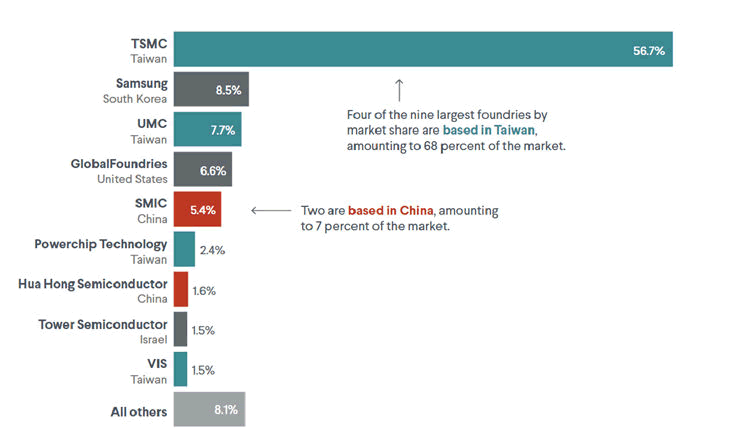
Figure 3: Market share of semiconductor foundries, 2021.
Launching such an operation would entail immense risks for China. Even a successful invasion would result in heavy losses to China's air and naval forces, which would take many years to replace. If the Chinese were unable to sustain their invasion forces in the face of significant maritime losses, as occurred in numerous iterations, the invasion forces on Taiwan would risk being destroyed. This failure could lead to the capture of tens of thousands of prisoners of war, a highly visible and emotionally charged symbol of defeat. Although the study did not investigate the potential effects of these losses on the Chinese political system, the Chinese Communist Party would be jeopardizing its hold on power.
For Taiwan, even a successful defense would carry substantial human, economic, military and political costs.
• Taiwanese economic devastation: Even if Chinese forces were ultimately repelled, they would still inflict severe damage to Taiwanese infrastructure and cripple the island's economy for an extended period.
• Cybersecurity concerns: While the simulation incorporated cyber effects at the operational level, it did not assess the potential economic and social ramifications. Both Taiwan and the United States could experience disruptions to their civilian and economic infrastructure from cyber-attacks.
• Geopolitical implications: The international landscape would not remain stagnant during and after a U.S.-China conflict. Other major powers, such as Russia, North Korea, or Iran, might exploit the U.S. preoccupation to advance their own strategic interests. Furthermore, a weakened U.S. military might struggle to maintain the balance of power in regions like Europe or the Middle East following the conflict.
Politics and Strategy
The Department of Defense should establish a minimum requirement to regularly consult and share information on U.S. engagement objectives, plans, and activities in the IndoPacific region with Australia, Japan, and India. These consultations should mirror the structure of the existing U.S.- Australia-India-Japan Consultations and supporting trilateral dialogues, and include annual quadrilateral meetings, annual trilateral meetings, and biannual bilateral consultations with the relevant counterparts from these partner nations. This requirement should be embraced by the teams responsible for Australia, Japan, and India at the Office of the Secretary of Defense, the Indo-Pacific Command J5, and the Indo-Pacific Command component commands, as well as by U.S. Embassy defense teams across the Indo-Pacific region. This cooperative engagement should start at the working level and be elevated as appropriate.
The report offers several specific recommendations for strengthening U.S. cooperation with key regional partners:
• For Australia, the U.S. should deepen its understanding of Australia's bilateral engagement programs, particularly in the area of English-language professional military training. The U.S. should also encourage Australia and New Zealand to take a leading role in the Pacific islands, and explore options to expand air force cooperation and rotational deployments.
• In the context of U.S.-Japan security cooperation in Southeast Asia, the focus should be on addressing nonstate actors and transnational threats, leveraging Japan's expertise in logistics, maintenance, and training/exercises. The U.S. should also consider joint HA/DR planning and exercises with Japan.
• Regarding India, the U.S. should encourage its growing engagement with allies like Australia and Japan, as well as emerging partners in the region. Opportunities for collaboration in areas like cyber and electronic warfare should be explored. Increased professional military and civilian education exchanges can help build long-term U.S.- India ties. The U.S. should also share relevant information with India on China's actions in disputed Himalayan areas, and facilitate Indian participation in U.S.-led security forums.
Prioritize deepening diplomatic and military ties with Japan: The ability to operate from U.S. bases in Japan is essential for U.S. military success in a conflict scenario. Without access to Japanese airfields, U.S. fighter and attack aircraft would have to deploy from Andersen Air Force Base in Guam, which could be significantly damaged by Chinese missile strikes. This would allow China to concentrate its air power and provide direct support to ground forces in Taiwan. Additionally, the non-involvement of the Japan Self-Defense Forces would shift the military balance in China's favor.
Clarify war plan assumptions: Military planning appears to assume that U.S. forces will be able to deploy onto the sovereign territory of allied nations during a crisis. Specifically, the Army and Marine Corps appear to presume that Marine Littoral Regiments and Army Multi-Domain Task Forces will be pre-positioned in the Philippines, Taiwan, or on forward Japanese islands before the onset of hostilities. This forward positioning is militarily advantageous as it enables these units to be in close proximity to Chinese naval forces, thereby allowing them to engage with anti-ship missiles. China's capacity to interdict U.S. force deployment after the start of conflict underscores the critical importance of these prewar deployments to the operability of numerous U.S. military capabilities.
Do not plan on striking the mainland: Conducting strikes against targets on the Chinese mainland poses significant risks of escalation, as discussed in depth in the justification for the "U.S. National Command Authority rules out strikes on Chinese mainland" scenario. Even if plans developed during peacetime call for mainland strikes, the National Command Authority may choose to withhold such permissions in an actual conflict. Therefore, it would be prudent to develop contingency plans that do not rely on striking the Chinese mainland. However, if permissions for such strikes are granted, military leaders should prepare targeted plans to neutralize high- value assets, such as over-the-horizon radar, satellite uplink stations, and critical aircraft that could influence the battle for Taiwan.
Strengthen Taiwanese ground forces: The United States may face difficulties in rapidly deploying ground forces to Taiwan. While in some scenarios, the U.S. was able to sufficiently degrade the People's Liberation Army Navy, allowing for the potential introduction of some U.S. ground troops after several weeks of fighting, these forces would still face risks from residual Chinese air and naval capabilities.
However, by that point, the battle for control of Taiwan would likely have already been determined. Once hostilities commence, Taiwan's geographic isolation precludes the provision of direct and substantial military aid from the United States and its allies, unlike the situation in the ongoing Ukraine conflict.
Move Taiwanese air and naval forces toward asymmetry: Taiwan has historically developed a military with diverse capabilities comparable to major powers like the United States. This has involved acquiring large surface vessels, advanced aircraft, submarines, and ground forces. Currently, Taiwan's air force comprises 534 combat aircraft, and its navy has 38 major ships.
This military structure was previously well-suited to Taiwan's strategic context, when Chinese air and naval forces were relatively weak. Taiwan's ability to contest China in both the air and at sea enabled it to repel an invasion before ground troops could make landfall, thereby minimizing damage to Taiwanese infrastructure and the economy. Additionally, this military posture provided tangible demonstrations of Taiwan's power and status during peacetime, which could counter Chinese efforts to test Taiwan's sovereignty.
Doctrine and Posture
Fortify and expand air base capacity in Japan and Guam: The study indicates that in every conflict simulation, the United States and Japan sustain substantial losses of military aircraft, ranging from an average of 290 in optimistic scenarios to 646 in more pessimistic ones. This loss represents a significant proportion, between 12 to 32 percent, of the U.S. Air Force's operational fighter and attack aircraft strength after just three to four weeks of hostilities.
Restructure U.S. air force doctrine and procurement to address vulnerability on the ground: In the face of substantial ground losses, U.S. participants frequently dispersed their aircraft to regional civilian airports in Japan. This dispersion strategy, which involved distributing aircraft across multiple locations, diluted the impact of individual Chinese missile strikes and consequently mitigated aircraft losses. Dispersion has emerged as a central consideration in contemporary debates surrounding operational approaches in the Western Pacific region.
Do not plan on overflying the Chinese mainland: The wargames simulations consistently demonstrated that the U.S. Air Force was unable to commence operations within Chinese airspace by the conclusion of the exercise. Instead, the Air Force was compelled to concentrate its efforts on the ground, air, and naval engagements in and around Taiwan, leaving limited scope for the application of airpower over the Chinese mainland. The substantial level of attrition encountered was sufficient without the additional challenge of having to contend with China's integrated air defense system on its home territory.
Weapons and Platforms
Shift to smaller, more survivable ships: The simulations showed that the United States suffered significant losses of surface ships due to their forward deployment within China's defensive perimeter. Typically, these losses included two aircraft carriers and 15 to 25 cruisers and destroyers, representing 15 to 25 percent of the U.S. Navy's total surface combatants. The losses were concentrated among the larger surface ships in the Western Pacific, and during the most intense scenarios, the U.S. Navy lost a major ship on a daily basis.
Conclusion
The Indo-Pacific security landscape is increasingly complex, shaped by geopolitical rivalry, maritime disputes, and emerging non-traditional threats such as cyber risks and climate insecurity. Strategic competition demands balanced policies that strengthen regional partnerships, enhance defense capabilities, and uphold a rules-based order. Proactive diplomacy, multilateral cooperation, and adaptive security frameworks are essential to mitigate risks, ensure stability, and safeguard economic and strategic interests in this critical global region.
References
- Frisby W, Getz D (1989) Festival management: A case study perspective. J Travel Res. 28(1):7-11.
[Crossref] [Google Scholar]
- Garrod B, Fyall A, Leask A, Reid E (2012) Engaging residents as stakeholders of the visitor attraction. Tour Manag. 33(5):1159-1173.
[Crossref] [Google Scholar]
- Getz D, Andersson T, Carlsen J (2010) Festival management studies: Developing a framework and priorities for comparative and crossâ?cultural research. IJEFM. 1(1):29-59.
[Crossref] [Google Scholar]
- Akram R, Chen F, Khalid F, Huang G, Irfan M (2021) Heterogeneous effects of energy efficiency and renewable energy on economic growth of BRICS countries: A fixed effect panel quantile regression analysis. Energy. 215:119019.
[Crossref] [Google Scholar]
- Balsalobre-Lorente D, Leitão NC (2020) The role of tourism, trade, renewable energy use and carbon dioxide emissions on economic growth: evidence of tourism-led growth hypothesis in EU-28. Environ Sci Pollut Res Int. 27(36):45883-45896.
[Crossref] [Google Scholar] [PubMed]
- Becker B, Fischer D (2013) Promoting renewable electricity generation in emerging economies. Energy Policy. 56:446-455.
[Crossref] [Google Scholar]
- Green MB, Schwarz JH (1984) Anomaly cancellations in supersymmetric D=10 gauge theory and superstring theory. PhyS Lett B. 149(1-3):117-122.
[Crossref] [Google Scholar]
- Witten E (1984) Some properties of O (32) superstrings. PhyS Lett B. 149(4-5):351-356.
[Crossref] [Google Scholar]
- Guth AH (1981) Inflationary universe: A possible solution to the horizon and flatness problems. PhyS Lett B. 23(2):347-356.
[Google Scholar]
Citation: Rimba SKK (2025) Security Assessment and Emerging Threats in the Indo-Pacific Region: Strategic Implications and Policy Recommendations. Br J Res. 12:137.
Copyright: © 2025 Rimba SKK. This is an open-access article distributed under the terms of the Creative Commons Attribution License, which permits unrestricted use, distribution, and reproduction in any medium, provided the original author and source are credited.