Research Article - (2026) Volume 12, Issue 1
Patient Population Characteristics in Transcatheter Aortic Valve Replacement: A Statistical Report
Stefanos Votsis1,2,3* and
Konstantinos Marmagkiolis
1Department of Cardiology, Medical College of Georgia at Augusta University, Augusta, United States of America
2Department of Cardiology, University of South Florida, Tampa, United States of America
3Tufts Medical Center, Boston, Massachusetts, United States of America
4Tampa General Hospital, University of South Florida, Department of Cardiology, Tampa, Florida, United States of America
5Anderson Cancer Center, University of Texas, Department of Cardiology, Houston, Texas, United States of America
*Correspondence:
Stefanos Votsis, Department of Cardiology, Medical College of Georgia at Augusta University, Augusta,
United States of America,
Email:
Received: 04-Feb-2026, Manuscript No. IPIC-26-23502;
Editor assigned: 06-Feb-2026, Pre QC No. IPIC-26-23502 (PQ);
Reviewed: 20-Feb-2026, QC No. IPIC-26-23502;
Revised: 27-Feb-2026, Manuscript No. IPIC-26-23502 (R);
Published:
06-Mar-2026, DOI: 10.21767/2471-8157.11.01.116
Abstract
Transcatheter Aortic Valve Replacement (TAVR) is a well-established and effective interventional treatment of aortic stenosis. We conducted a retrospective descriptive analysis based on prior documentation and present the demographic and hemodynamic characteristics of 298 patients who were TAVR candidates between 2014-2018 at a single center (Tufts Medical Center, Boston, MA) with the aim to give a clear picture and better understand this population segment. While both sexes were equally represented, the vast majority of the patients were over 70 years old, and an actual 58% were over the age of 80. Moreover, the majority of the patients (64%) were considered high- or exceptional risk for Surgical Aortic Valve Replacement (SAVR) according to their calculated Society of Thoracic Surgeons (STS) risk score. Pertaining to their hemodynamic parameters (calculated by preoperative transthoracic echocardiogram and including aortic valve transvalvular gradients) most patients had well-documented severe or moderate aortic stenosis, although their vital signs (blood pressure and heart rate) were well-adjusted with the appropriate pharmacotherapy. In conclusion, the overall profile of the TAVR candidate, for the time being, reflects an elderly patient with moderate or severe aortic stenosis, with a significant surgical risk albeit with well-regulated vital signs. As the TAVR indications keep expanding, this patient type might change as well in the not-so-distant future.
Keywords
Transcatheter aortic valve replacement; TAVI; Aortic stenosis; Interventional cardiology
Introduction
Aortic Stenosis (AS) is the most common primary valve lesion requiring surgery or transcatheter intervention in Europe and North America. Degenerative pathogenesis with cusps calcification is most common in developed countries and prevalence is rising rapidly because of the ageing population, with an estimated 12,6 million cases worldwide in 2017. Nonrheumatic aortic stenosis in patients over the age of 65 years leads to significant morbidity and mortality. Valve intervention in patients with symptomatic severe aortic stenosis leads to a significant reduction in mortality and enhances quality of life [1]. The treatment of AS in patients over the age of 65 years has changed over the last 10 years to include both Surgical Valve Replacement (SAVR) and Transcatheter Aortic Valve Replacement (TAVR). Multiple randomized controlled trials have demonstrated that TAVR is as effective as SAVR in the treatment of AS with a significant reduction in post procedural complications in all surgical risk cohorts [2]. This has led to a significant increase in TAVR procedures [3], and the patient population which has benefited from this relatively new procedure has been steadily expanding over time.
Methods
The aim of this study is the statistical analysis of the patient population who are candidates for TAVR, in order to record and better understand the characteristics of this population subgroup. Our initial patient group consisted of 417 patients. However, a total of 298 patients were selected to participate in our study; the rest were excluded due to insufficient data, as, in some cases, the patient records were incomplete or had been unavailable, especially the earliest ones. Our study was a retrospective descriptive analysis and the participants were TAVR candidates at a single center (Tufts Medical Center, Boston, MA) during the years 2014-2018. Institutional review board approval was obtained for our study. We statistically analyzed patient demographic data, patient hemodynamic parameters and patient aortic valve measurements and characteristics. No subgroup analyses or adjustments for confounding variables were planned.
Patient demographic data included patient age, gender, Body Mass Index (BMI) and Society of Thoracic Surgeons (STS) score, which is the most common surgical risk score in use for patients who are TAVR or SAVR candidates [4]. Patient hemodynamic parameters included left ventricle Ejection Fraction (EF), left ventricle Stroke Volume (SV), Systolic Blood Pressure (SBP) and Heart Rate (HR).
Results
Patient characteristics
In the patient population included in our study, both sexes were similarly represented (45% male vs. 55% female patients) (Figure 1).
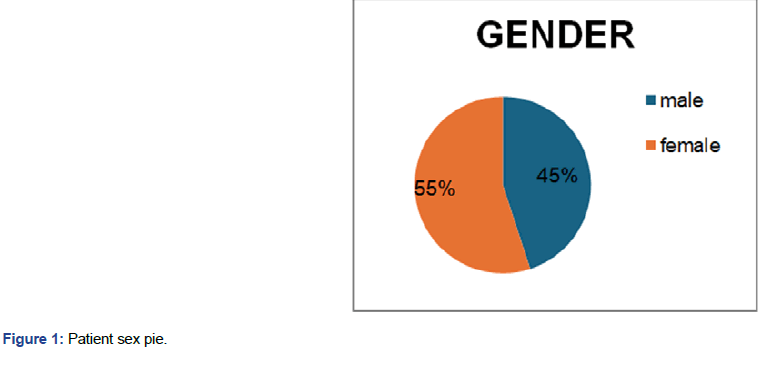
Figure 1: Patient sex pie.
As regards their age group, 3% were between 40-60 years old, 10% were 61-70 years old, and 29% were 71-80 years old. Almost half of the patients (49%) were 81-90 years old, and a respectable 9% were over 90 years old (Figure 2) (mean=80, median=82, Standard Deviation (SD)=8,7).
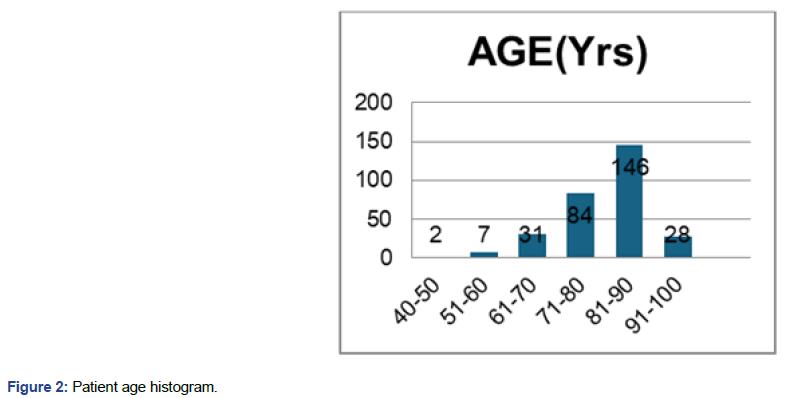
Figure 2: Patient age histogram.
5% of our patients had a BMI between 10-20 kg/m2, whereas the vast majority (68%) had a BMI between 21-30 kg/m2. 22% of the patients had a BMI between 31-40 kg/m2, and the rest of the patients (5%) had a BMI over 40 kg/m2 (Figure 3) (mean=27.9, median=27, SD=5,7).
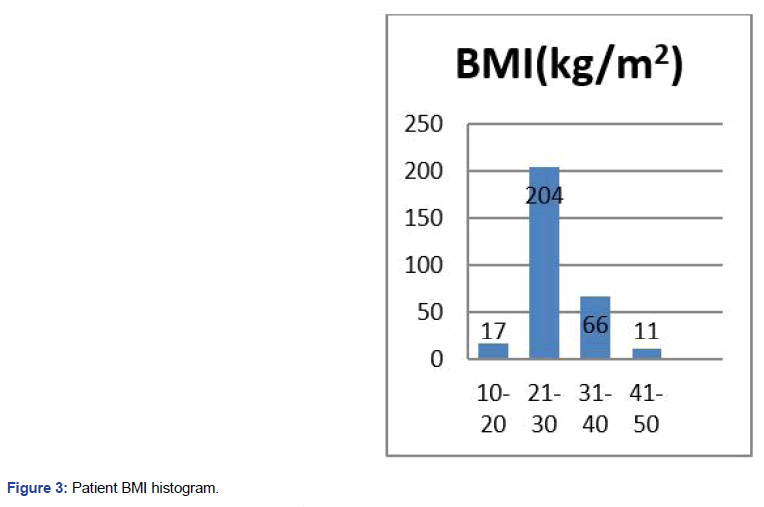
Figure 3: Patient BMI histogram.
5% of our patients had a BMI between 10-20 kg/m2, whereas the vast majority (68%) had a BMI between 21-30 kg/m2. 22% of the patients had a BMI between 31-40 kg/m2, and the rest of the patients (5%) had a BMI over 40 kg/m2 (Figure 3) (mean=27.9, median=27, SD=5,7).
The majority (64%) of the patients studied were considered high or exceptional risk for surgical aortic valve replacement. The surgical risk of our patient group was calculated according to the STS risk score. 36% of the patients had an STS risk score between 0%-5%, and another 41% had an STS score between 5%-10%. 14% of the patients had an STS score between 11%-15%. The rest of the patients were split in even categories: 3% had an STS score of 16%-20%, another 3% scored between 20%-25% and, lastly, 3% had an STS score over 25% (Figure 4).
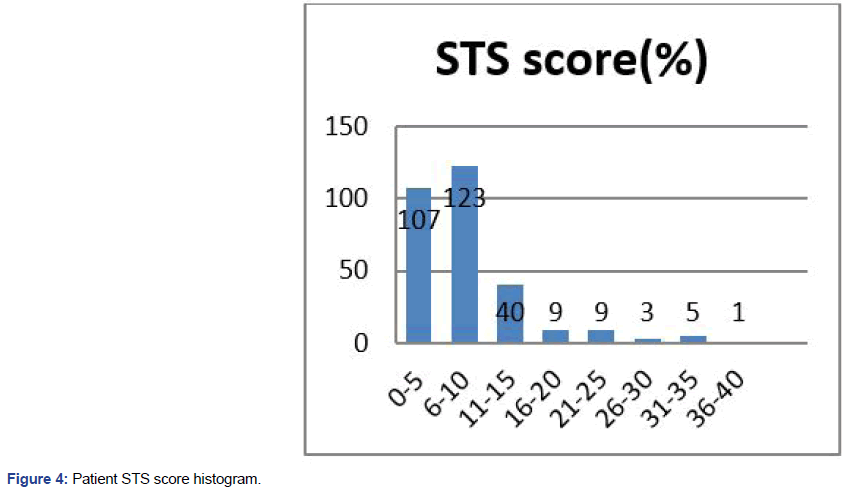
Figure 4: Patient STS score histogram.
Hemodynamic parameters
Since our patient group consisted of candidates for TAVR, the aortic valve hemodynamic measurements during pre-operative ultrasound evaluation predictably were demonstrative of moderate or severe aortic stenosis. Regarding the aortic valve maximum Velocity (Vmax), 9% of the patients had a Vmax of 2-3 m/s, 40% had a Vmax of 3.1-4 m/s, 41% had a Vmax of 4.1%-5% and, finally, 10% had a Vmax over 5 m/s. The aortic valve maximum gradient was, for 11% of the patients, between 20-40 mmHg, for 30% of the patients between 40-60 mmHg and, for 59% of the patients over 60 mmHg (Figure 5). The corresponding classification for the aortic valve mean gradient was the following: 7% of the patients had a mean gradient between 0-20 mmHg, 50% of patients had a mean gradient of 21-40 mmHg and, finally, for 43% of the patients the mean gradient was over 40 mmHg (Figure 6).
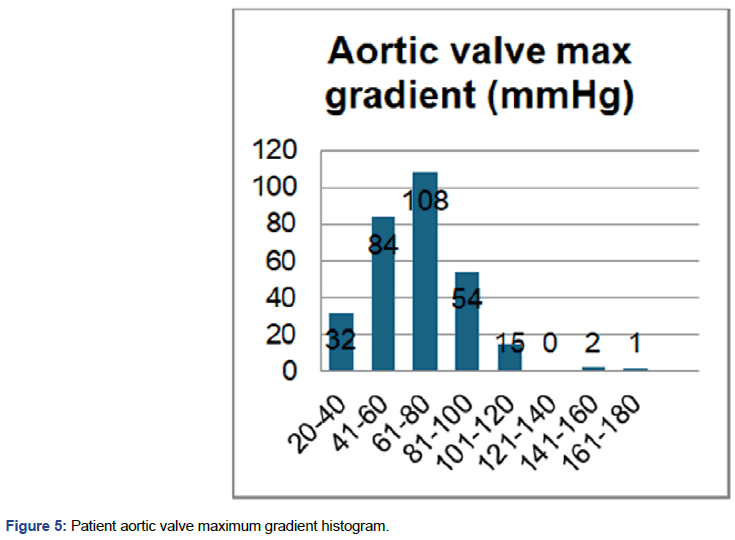
Figure 5: Patient aortic valve maximum gradient histogram.
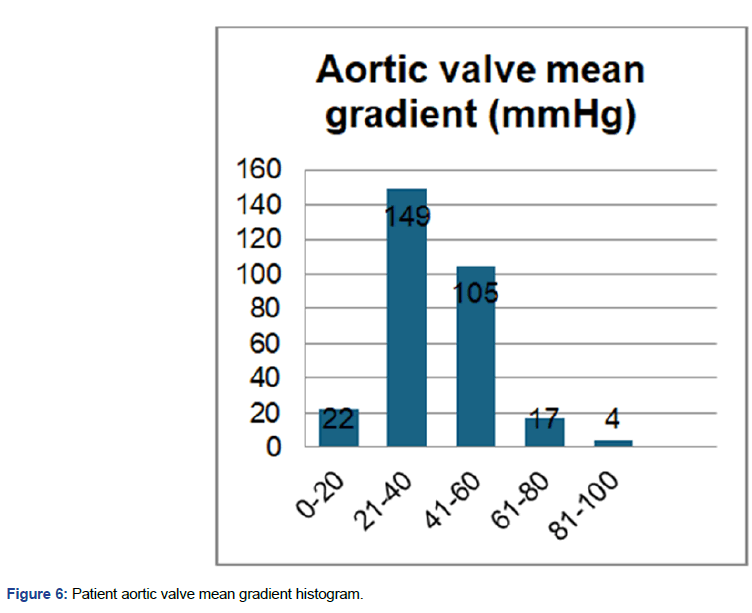
Figure 6: Patient aortic valve mean gradient histogram.
In addition, the left ventricle Ejection Fraction (EF) was up to 30% for 10% of the patients and between 31%-40% for 9% of the patients. Another 11% of the patients had an EF between 41%-50% and, finally, the majority of the patients (70%) had a normal EF (>50%) (Figure 7) (mean=53.8, median=60, SD=12.9).
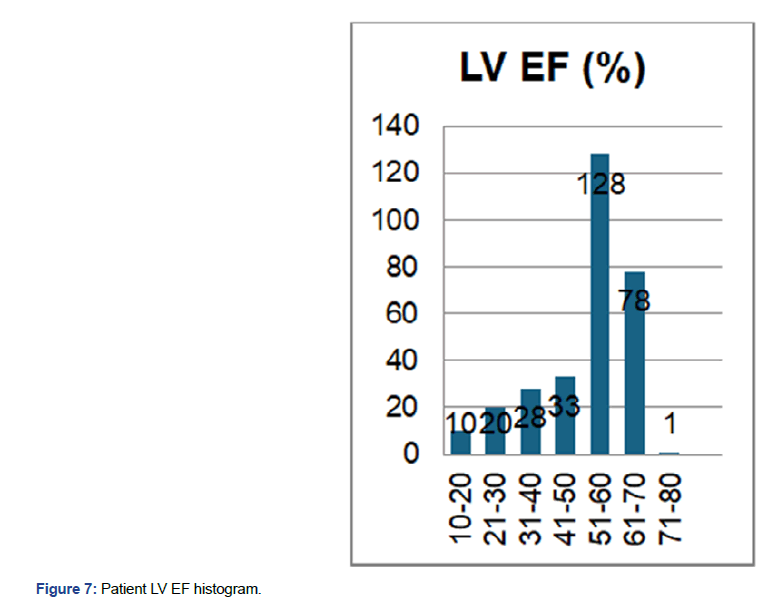
Figure 7: Patient LV EF histogram.
As regards left ventricle Stroke Volume (SV), 4% of the patients had an SV between 0-20 ml. 18% of the patients had an SV between 20-40 ml, and 41% of the patients had an SV between 40-60 ml. Finally, 25% of the patients had an SV between 61-80 ml, and 12% of patients had an SV over 80 ml (mean=58, median=55, SD=22.8-all measurements were non-indexed).
Pertaining to vital signs, Systolic Blood Pressure (SBP) and Heart Rate (HR) measurements were recorded as well. 5% of the patients had an SPB under 100 mmHg, while 19% of the patients had an SPB between 100-120 mmHg. 38% of the patients had an SBP between 120-140 mmHg, whereas 28% of the patients had an SBP between 140-160 mmHg. Finally, 10% of the patients had their SBP over 160 mmHg (mean=134, median=133.5, SD=21.7). Additionally, 31% of the patients had a HR between 40-60 bpm, and 52% of the patients had a HR between 60-80 bpm. 14% of the patients had a HR between 80-100 bpm, and only 3% had over 100 bpm (mean=69, median=67, SD=15.4). This last classification can be possibly attributed to b-blocker administration to all 298 patients in our study. It needs to be clarified that the rest of the medications the patients were receiving was not recorded nor analyzed as a variable affecting neither SBP nor HR.
Discussion
Use of SAVR and TAVR as complementary treatment options has allowed a substantial increase in the overall number of patients with aortic stenosis undergoing surgical or transcatheter intervention in the past decade [5]. Randomized Controlled Trials (RCTs) have assessed the two modes of intervention across the spectrum of surgical risk in predominantly elderly patients [6]. In brief, these trials used surgical risk scores to govern patient selection and demonstrate that TAVI is superior to medical therapy in extreme-risk patients [7-9]. Furthermore, the 2025 European Society of Cardiology (ESC)/European Association for Cardio-Thoracic Surgery (EACTS) Guidelines for the management of valvular heart disease list several factors that either favor the surgical (SAVR) or the interventional (TAVR) option. Namely, factors that favor SAVR are: a) Low surgical risk b) Younger age and c) Active or suspected endocarditis. On the other hand, TAVR should be considered in patients with a) Higher surgical risk b) Older age c) Previous cardiac surgery (particularly intact coronary artery bypass grafts at risk of injury during repeat sternotomy) and d) Severe frailty [10,11]. As a result, the TAVR candidates are usually patients of a more advanced age, more frail, with more comorbidities and higher surgical risk, which is clearly proven by our data analysis. Of course, other factors might be taken into account pertinent to the type of therapeutic operation for aortic stenosis. These include both anatomical and procedural factors as well as probable concomitant cardiac conditions that might require intervention. Prosthetic heart valve durability is a key consideration in younger patients (<75 years) at low surgical risk and SAVR (if feasible) is therefore the preferred treatment option. Conversely, durability is a lower priority in older patients (>75 years), or those who are inoperable or high risk for surgery, and TAVR is preferred in these groups (particularly if feasible via transfemoral approach). The Heart Team should make tailored recommendations for remaining patients based upon their individual characteristics [12,13].
It is worth mentioning, however, that recent trials have also demonstrated that TAVR is non-inferior to SAVR in high- and intermediate-risk patients at follow-up extending to 5 years [14]. The more recent PARTNER 3 and Evolut Low Risk trials demonstrated that TAVR is non-inferior to SAVR in low-risk patients at 2-year follow-up [15]. Importantly, patients in the low-risk trials were predominantly male and relatively elderly (e.g. PARTNER 3: Mean age 73.4 years, <70 years 24%, 70-75 years 36%, >75 years 40%, >80 years 13%) whilst those with low-flow aortic stenosis or adverse anatomical characteristics for either procedure (including bicuspid aortic valves or complex coronary disease) were excluded. Thus, it can be assumed that, as the TAVR candidate pool expands over time and includes moderate- and low-risk patients (which means younger patients with less comorbidities and surgical risk), the demographic archetype of the elderly and frail patient is bound to change.
Our study was a retrospective, single-center review, presenting the limitations related to such studies (selection bias, sample size and lack of longitudinal outcome analysis). Moreover, the data mining could not fully address the classification of aortic stenosis; therefore it is probable that several patients presented with moderate aortic stenosis rather than low-flow/low gradient severe aortic stenosis. This is, additionally, the reason our study lacks further classification of the type of severe aortic stenosis the participants were presenting with.
Conclusion
Patients with moderate or severe aortic valve stenosis are candidates for Transcatheter Aortic Valve Replacement (TAVR) and represent a unique segment of the general population. Our study demonstrates that these are usually patients of advanced age and high surgical risk, although the majority of them have preserved left ventricle systolic function and well-regulated vital signs (blood pressure and heart rate). Pertinent future research of the aforementioned population might include multi-center analyses or longitudinal outcome studies, examining how TAVR candidate profiles evolve over time. As the TAVR indications themselves expand over time as well, it is possible that the demographic and hemodynamic characteristics of the TAVR candidates will shift and expand in tandem in the foreseeable future.
References
- Whitener G, McKenzie J, Akushevich I, White WD, Dhakal IB, et al. (2016). Discordance in grading methods of aortic stenosis by pre-cardiopulmonary bypass transesophageal echocardiography. Anesth Analg. 122(4):953-958.
[Crossref][Google Scholar][PubMed]
- Monin JL, Quere JP, Monchi M, Petit H, Baleynaud S, et al. (2003). Low-gradient aortic stenosis: Operative risk stratification and predictors for long-term outcome: A multicenter study using dobutamine stress hemodynamics. Circulation. 108(3):319-324.
[Crossref][Google Scholar][PubMed]
- Levy F, Laurent M, Monin JL, Maillet JM, Pasquet A, et al. (2008). Aortic valve replacement for low-flow/low-gradient aortic stenosis: Operative risk stratification and long-term outcome: A European multicenter study. J Am Coll Cardiol. 51(15):1466-1472.
[Crossref][Google Scholar][PubMed]
- Hobbs RD, Paone G, D'Agostino RS, Jacobs JP, McDonald DE, et al. (2018). Myocardial revascularization: The evolution of the STS database and quality measurement for improvement. Indian J Thorac Cardiovasc Surg. 34(Suppl 3):222-229.
[Crossref][Google Scholar][PubMed]
- Carroll JD, Mack MJ, Vemulapalli S, Herrmann HC, Gleason TG, et al. (2020). STS-ACC TVT registry of transcatheter aortic valve replacement. J Am Coll Cardiol. 76(21):2492-2516.
[Crossref][Google Scholar]
- Leon MB, Smith CR, Mack MJ, Makkar RR, Svensson LG, et al. (2016). Transcatheter or surgical aortic-valve replacement in intermediate-risk patients. N Engl J Med. 374(17):1609-1620.
[Crossref][Google Scholar]
- Leon MB, Smith CR, Mack M, Miller DC, Moses JW, et al. (2010). Transcatheter aortic-valve implantation for aortic stenosis in patients who cannot undergo surgery. N Engl J Med. 363(17):1597-1607.
[Crossref][Google Scholar][PubMed]
- Praz F, Borger MA, Lanz J, Marin-Cuartas M, Abreu A, et al. (2025). 2025 ESC/EACTS Guidelines for the management of valvular heart disease: Developed by the task force for the management of valvular heart disease of the European Society of Cardiology (ESC) and the European Association for Cardio-Thoracic Surgery (EACTS). Eur Heart J. 1(1): xwag001.
[Crossref][Google Scholar]
- Mack MJ, Leon MB, Smith CR, Miller DC, Moses JW, et al. (2015). 5-year outcomes of transcatheter aortic valve replacement or surgical aortic valve replacement for high surgical risk patients with aortic stenosis (PARTNER 1): A randomised controlled trial. Lancet. 385(9986):2477-2484.
[Crossref][Google Scholar][PubMed]
- Smith CR, Leon MB, Mack MJ, Miller DC, Moses JW, et al. (2011). Transcatheter versus surgical aortic-valve replacement in high-risk patients. N Engl J Med. 364(23):2187-2198.
[Crossref][Google Scholar][PubMed]
- Reardon MJ, Van Mieghem NM, Popma JJ, Kleiman NS, Søndergaard L, et al. (2017). Surgical or transcatheter aortic-valve replacement in intermediate-risk patients. N Engl J Med. 376(14):1321-1331.
[Crossref][Google Scholar][PubMed]
- Leon MB, Mack MJ, Hahn RT, Thourani VH, Makkar R, et al. (2021). Outcomes 2 years after transcatheter aortic valve replacement in patients at low surgical risk. J Am Coll Cardiol. 77(9):1149-1161.
[Google Scholar][PubMed]
- Thyregod HGH, Ihlemann N, Jørgensen TH, Nissen H, Kjeldsen BJ, et al. (2019). Five-year clinical and echocardiographic outcomes from the NOTION randomized clinical trial in patients at lower surgical risk. Circulation. 139(24):2714-2723.
[Crossref][Google Scholar][PubMed]
- Siontis GC, Praz F, Pilgrim T, Mavridis D, Verma S, et al. (2016). Transcatheter aortic valve implantation vs. surgical aortic valve replacement for treatment of severe aortic stenosis: A meta-analysis of randomized trials. Eur Heart J. 37(47):3503-3512.
[Crossref][Google Scholar][PubMed]
- Mack MJ, Leon MB, Thourani VH, Makkar R, Kodali SK, et al. (2019). Transcatheter aortic-valve replacement with a balloon-expandable valve in low-risk patients. N Engl J Med. 380(18):1695-1705.
[Crossref][Google Scholar][PubMed]
Citation: Votsis S, Marmagkiolis K. (2026) Patient Population Characteristics in Transcatheter Aortic Valve Replacement: A Statistical Report. Interv Cardiol J. 11:116.
Copyright: © 2026 Votsis S, et al. This is an open-access article distributed under the terms of the Creative Commons Attribution License, which permits unrestricted use, distribution, and reproduction in any medium, provided the original author and source are credited.