Research Article - (2025) Volume 12, Issue 1
Exploring an Urban Landscape Dynamics, Affected by “Tabula Rasa� and “Laissez-Faire� Planning Policies
Ioan Ianos1*,
Cerasella Craciun2 and
Anthony Sorensen3
1Interdisciplinary Centre of Advanced Research on Territorial Dynamics, University of Bucharest, 050663 Bucharest, Romania
2Department of Urban Planning and Landscape, Ion Mincu University of Architecture and Urbanism, 10014 Bucharest, Romania
3Department of Humanities, Arts, Social Sciences and Education, University of New England, Armidale, NSW 2351, Australia
*Correspondence:
Ioan Ianos, Interdisciplinary Centre of Advanced Research on Territorial Dynamics, University of Bucharest, 050663 Bucharest,
Romania,
Email:
Received: 16-Sep-2024, Manuscript No. IPBJR-24-21537;
Editor assigned: 18-Sep-2024, Pre QC No. IPBJR-24-21537 (PQ);
Reviewed: 04-Oct-2024, QC No. IPBJR-24-21537;
Revised: 04-Jan-2025, Manuscript No. IPBJR-24-21537 (R);
Published:
11-Jan-2025, DOI: 10.35841/2394-3718-12.2.128
Abstract
Analysing a case study, this research explores what happened with a communist abandoned megaproject after the collapse of the totalitarian regime. About a quarter century, this area it’s an example of applied “laissez-faire” planning policies, however an important historical-cultural symbol was totally erased and entire area starting a naturalisation process. Considering that entire area was strongly affected by communist “tabula rasa” actions, the paper search responses to two key questions: a) The existing Natural urban protected area (on the place of projected lake) has a real potential sustainability?; b) There is a chance to spatially reconfigure the memory of former Monastic complex VăcăreÈ™ti? Testing the fifth work hypotheses, connected with these questions, and using the conclusions of 48 research semi-structured interviews with specialists in the planning domain, the findings show surviving risk of the current urban protected area and the great difficulties to update the collective memory of the former cultural religious values. The main general conclusion is that long-time inaction and lack of coherent urban renewal program for a sustainable integration of abandoned projects have negative effects on the fragile spaces and multiply the costs of city future development.
Keywords
Abandoned spaces; Destructive creation; Erased space; “Laissez-faire” management
Introduction
A mass of demographic, economic growth, technological, cultural, ideological, and governance variables can seriously impact the evolution of urban landscapes in major cities. Plieninger et al. argue that such urban areas can become a major driver of local and global sustainability. Moreover, the rate of global urbanization is increasing, and the United Nations estimates that by 2050 70% of the world’s population will live in urban areas. The European Landscape Convention (ELC) defines the landscape as the result of the interactions between natural and anthropic factors and advises public authorities to adopt appropriate policies to protect and manage the urban landscapes. For political and administrative decision-makers this document highlights their obligation to assess local residents’ views and visions concerning landscape quality. CrÄ?ciun also notes that landscapes embrace natural, social, and cultural dimensions, while simultaneously aiding real or symbolic material and cultural production, Contemporary literature on urban landscape dynamics is highly diversified due to (a) The specificity of cities, (b) A multitude of disciplines focussing on different perspectives, (c) Discovery of hidden contexts, (d) Adoption of new analytical methods, and (e) Defining new approaches that democratize landscape analysis. Starting with C. Sauer, who defined the cultural landscape, scholars from architecture, geography, history, philosophy, environmental analysis or urban planning have enhanced older ideas with a range of new scientific dimensions. Closely related to the urbanization process, the urban landscape has a key position, due to its importance in the deciphering of “organised complexity” and the dynamic mechanisms of cities. Pumain et al. demonstrate the self-organisation capacity of the cities, which automatically implies the connection with resilience thinking. Cities also often have extraordinary internal diversity including a jumble of interactions and feedbacks which constitute a kind of organiser/disorganiser chaos. Having a dynamic causality, the evolutionary development of cities embodies successive forms delivering permanent changes, or what one might term a process of landscape morphogenesis. Urban morphogenesis with its six morphological processes explains why Hägerstrand defines the landscape having a “double face of graveyard and cradle of creation”. The trajectory from one form to another of an urban landscape is not a linear one, but rather spatially integrates the desire to keep conditions coming from collective memories, and the new products or services of emerging and increasingly dominant ideologies. Spatial cultural roots importantly help to resist and preserve urban identity in the face of radical urban or new neoliberal policies. The capacity to resist external environment shocks, by cultivating one’s own structural and functional adaptative power, measures the urban resilience, including the preservation of the urban landscape’s perennial values. The morphogenic process of urban landscape is very complex, including, occasionally, a strong transformation of the place, impoverishing its landscape heritage values. This transitory phase frequently means the demolition of the old buildings or erasure of the former land use, which, sometimes, can be assimilated with the tabula rasa process. Some scholars define the demolition as an unsustainable approach, taking into consideration the loss of resources, but simultaneously note the advantages of new social and cultural development by reconstruction of old buildings. Then the site acquires a new landscape physiognomy conforming with the urban planning policy. Practically, it becomes another place in the same topographical coordinates. Bucharest has many such examples arising from central-level ideological planning approaches promoted during communist period.
Such communist visions on urban landscape morphogenesis contributed to permanent urban transformation via a linear rapid transition from place to site and another place. Put another way, this approach amounts to creative destruction in Schumpeterian thinking. The urban evolutionary trajectories demonstrate that which is creative now, after a time variable period, becomes a barrier in the next development, which means destruction of the former creation. It’s about a cycle, which could be assimilated with an alternance of creative destruction with destructive creation.
Urban landscape dynamics embody a huge diversity of complex transformation processes, under historical and social-economic pressures, which explains the diversity of current cities’ landscapes and their evolutionary resilience. Urban landscape resilience is becoming a priority in the actual context of the urban dynamics generated by natural and anthropogenic disasters (including pandemics, refugee crisis, wars, etc.), climate change (aggressive heat islands, water crisis, etc.), or other urban vulnerabilities and especially the exponential growth pressure of various change factors such as black swan events. Our history shows that a dramatic instability in the urban landscape dynamics, outside of natural and social-economic disasters, is abruptly enabled by the pharaonic attitude of a dictatorial regime. The basic idea of the most important urban reconfigurations is to build a new city, district, or area by a tabula rasa approach, which easily permits designing a new landscape, simplifying or raising the entire city’s complexity, and increasing/decreasing its resilient capacity. The contemporary urban renewal of cities registers a high diversity, but always having a multitude of targets: social and economic inclusion, the collective and individual comfort, and permanent increasing of the quality of life.
Looking at the importance of the management of urban landscape, we have observed the high resilient capacity of abandoned initial land use to re-organize themselves. A built area abandoned by some decades has the natural capacity to comeback to a secondary natural landscape, which seems to be a naturalization of strong anthropic area. The sustainability of such landscape is correlated with the pedo-climatic local conditions, and with the community implications to protect the natural phenomena. Given the morphometric characteristics, and the poor conditions for a strong naturalization of the analysed area, promoted by governmental decision as natural urban park, our analysis tries to show some critical points.
The abandonment of the communist planning model and replacing it with a liberal planning required a rethinking of entire urban development process and new appropriated legislative tools. The decay between the urban development and adoption of the new legislation has created a real chaos, existing numerous situations when the elementary norms were not respected, especially the protection of green spaces and lake surroundings. By land reform, lack of urban planning tools, and weak institutional response to the pressure of population and new real estate developers, rapidly extended the residential and commercial spaces strongly affected the urban and landscape. Such a phenomenon is developed: a) By masterplans extension on agriculture areas, surrounding of big cities; b) By demolitions of some individual poor houses, uninhabited or strongly affected by the last huge earthquake, and bought by new owners, inside of central and pericentral cities’ areas, and c) By installation of new commercial and residential buildings on the abandoned spaces created by closing the former industrial units.
Immediately, after the collapse of autocratic regime entire communist mechanism of densification stopped, and in the first years of the transition the new “aristocracy” started high speculative affairs in a “good environment” created by land reform and the total privatization of the apartment stock (bought “with nothing” by their own inhabitants). During the passage between millennia the aggression of this aristocracy against green spaces and the lake buffers totally changed the urban and peri-urban landscape. Unfortunately, the main characteristics of urban planning, coming from indecision of local authorities, was “laissez-faire” management, which marked the present and the future urban areas development.
Our study is focused on the landscape dynamics in one such area, which totally changed initial structure and functions by a “tabula rasa” approach. It’s about VÄ?cÄ?reÈ?ti area, an important space for complex transformation of DâmboviÈ?a River as part of hydrotechnical changes in the ArgeÈ? basin. The main destination was the construction of water accumulation in the pericentral area, having an important role to ensure enough and constant DâmboviÈ?a water flow for navigation. This objective, by complete demolition of the area, including the VÄ?cÄ?reÈ?ti monastic complex (an important symbol of Bucharest’s history), achieved two CeauÈ?escu targets: One was the building of water reservoir, and another destroyed the VÄ?cÄ?reÈ?ti monastery, confirming the “church phobia” of the dictator [1 ].
The landscape urban dynamics should be directed to reconnect inhabitants with nature, to eliminate the barriers introduced by strong physical fragmentation. In this context the concept “leverage points” can be applied to our study area, as a tool to identify the points of amplification the flows and actions, targeting a kind of reconnection of people and nature in this space totally changed (due to an unfinished megalomanic project and passivity of post-communist urban authorities). After some megaprojects realized or unfinished by former totalitarian regime, people in Bucharest did not like this kind of project, promoted by some politicians, but a decent project embracing the cultural value of former VÄ?cÄ?reÈ?ti monastery could be a real leverage point for a sustainable development of the area.
Materials and Methods
The Study Area
Our Vacareati research area is in the pericentral zone of Bucharest city. An examination of its current land use structure suggests it is favourable for sustainable development. It includes the 183 ha Vacareati Natural Park, shown in Figure 1, whose status of an urban natural reservation was established by a government decision made in 2016. Part of it includes a lake area whose 10 to 12 m dam was constructed in 1988-1989. Although never full of intended water, some of it is now used for domestic water supply and occasional discharge into the Dâmboviaa River [2]. The area also includes the former monastic Vacareati complex (Figure 2) covering 1.8 ha, and its surrounding demolished space. This was replaced by the Sun Plaza Mall and other commercial buildings (Figure 3).
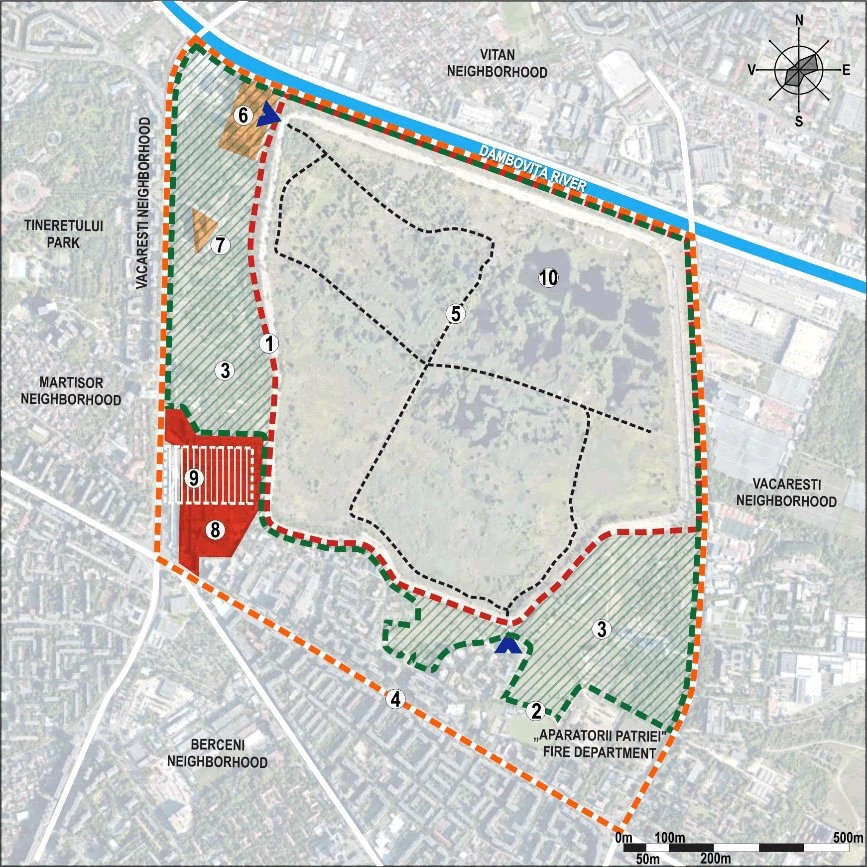
Figure 1: Vacareati natural urban park area. 1) Vacareati protected landscape limit; 2) Buffer zone limit; 3) Buffer zone; 4) Limit of the study area; 5) Visiting routes; 6) Asmita gardens residential complex; 7) Delta city residential complex (in extention); 8) Sun Plaza shopping center; 9) Area of the former Vacareati monastic complex; 10) Wet area in rainy season.
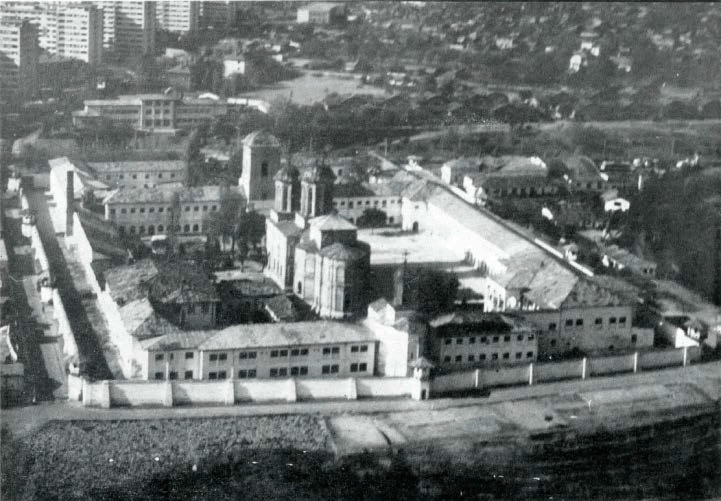
Figure 2: Perspective from lake Vacareati on the whole Vacareati monastery in 1974.
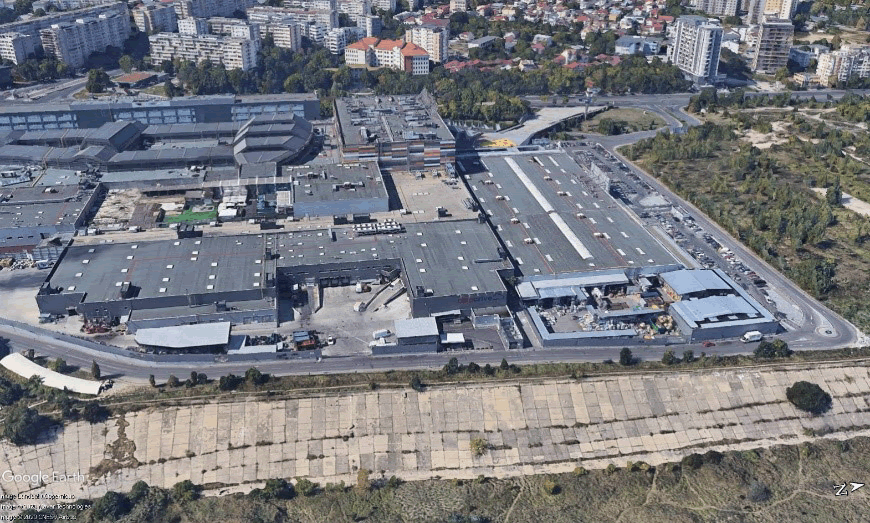
Figure 3: Perspective from Vacareati natural park on the mall built on the site of Vacareati monastery in 2022.
The dam is surrounded by some buffer space partially occupied by residential areas while the remainder is abandoned. A nearby luxury residential complex called Asmida gardens, which was built during 2008 and 2009, is well designed and managed. The area of the demolished Vacareati monastic complex is now partially occupied by a recently constructed commercial area which includes the Sun Plaza mall and related commercial infrastructure. The entire Western part has important residential potential which is being partially realized by another investor who is creating development called Delta city. However, the rest of land between Delta city and Sun Plaza remains abandoned space as potential investors for new residential projects are awaiting the supply of property documents [3].
Tumultuous Landscape Dynamics
The landscape dynamics of both the Vacareati lake and former monastery areas reveal some complementary trajectories starting from the initial landscapes to contemporary ones. However, our comparative analysis of landscape evolution over recent decades and the information coming from the interviews of residents demonstrates the emergence of dramatic alternative perspectives.
Until 1986, the urban landscape of both areas maintained their same structures with small differentiation. The monastery area registered very small internal changes conforming with the ecclesiastic rules of such sacred places. Likewise, the Vacareati lake area experienced slow anthropic process after the second World War, with a focus on increased residential densities. We appreciate that the entire period from 1900 to 1986 witnessed modest urban landscape dynamics focused on maintaining acceptable nature-man interaction.
The next four years revealed dramatic changes in both arenas, in conformation with Ceauaescu’s megalomaniac ideas about urban landscapes. He sought to transform urban landscapes via huge projects proposed for the city and Dâmboviaa river. Between September and December 1986, the Vacareati monastic complex was demolished, while in 1988 the excavation of Vacareati lake commenced, together with the surrounding dam. Practically, at the beginning of 1990, the entire area was an empty space, and after that, until 2016, was a totally abandoned landscape. Obviously, many new Romanian and foreign developers analysed the residential potential of this area, but different masterplans developed after 2003 were rejected by local decision-makers at the municipality (City council).
The passive indecision of local authorities over two decades, and uncertainty of the land’s juridical status encouraged selfnaturalization processes. For example, ecological associations were encouraged to propose creation of an urban natural reserve on the place of former projected lake. Therefore, by the middle of 2016, the Romanian government adopted an act creating the “Vacareati” urban natural park- also well-known under the alternative name of “Bucharest Delta”. Some years earlier, the Government started the building of the Sun Plaza mall on the place of the former communist “Piata Sudului” (specialized in agricultural products), called by people as “Hunger Circus” (due to the poverty of food) [4].
Starting from the current dynamics of this area, our research questions embrace the following themes: a) Does the natural urban protected area (in the place of projected Lake) have sustainability potential? and b) Is there a chance to spatially reconfigure the memory of former Vacareati monastic complex?
Searching the responses to these questions we have formulated five work hypotheses:
H1: “Tabula rasa” approach has drastically reduced the resilient capacity of urban landscapes.
H2: Physical landmarks of the abandoned space are driving force to enhance the resilience potential of urban landscape.
H3: Reaction time of urban administration to integrate mutilated space in the general urban landscape is explained by lack financial resources.
H4: Reintegration of erased spaces requires an optimal time to action through an integrated vision for future development.
H5: Sustainable reconstruction of such spaces should use nature-based solutions to harmonize present and future needs, integrating the historical and cultural memory of places.
Methodological Issues
Our exploratory research focused on data collection, comparative analyses of the different maps, plans and photography images, application of semi-structured interviews to urban planning specialists, processing data and the interpretation of the results. Some elements of social network analysis were also employed. The work of Hâncean and Rice and Yoshioka-Maxwell were used to enhance interpretation of the interview’s results delivered by specialists.
To identify the most appropriate specialists, and to obtain relevant responses we have used snowball sampling starting from a well-known specialist in the field. He agreed to our proposal to select four relevant domains connected with this area: Urban planning, architecture, landscape design, geography, adding the fifth category including other specialists in ecology and engineering. He proposed one specialist for each of the selected domains. They agreed to work with us and discussions with them enabled us to obtain other specialists for each domain. By iteration of the same procedure, we contacted 124 specialists, but 76 invoking different motivations (especially the poor knowledge about the Vacareati area) refused to participate (Figure 4).
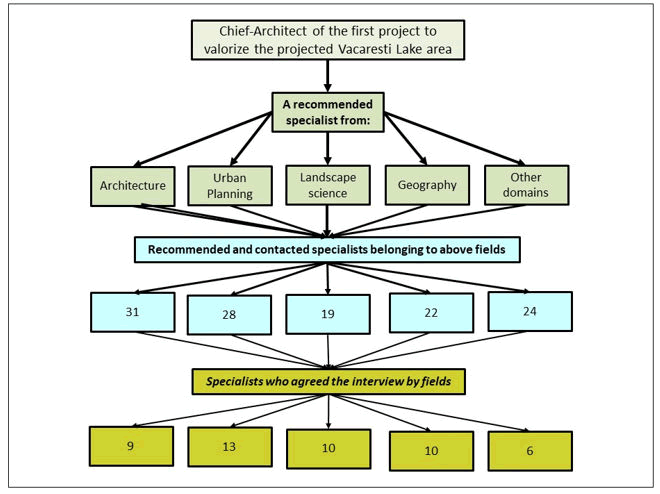
Figure 4: Selection procedure of interviewed specialists.
The interviews with specialists occurred during March, April, and October 2023, having an average duration between 45-60 minutes. However, despite a high refusal rate, we appreciate that the 48 who accepted interviews covered a large spectrum of fields directly or indirectly connected with our topic [5]. The structure of basic interview took place around 11 key questions. The interviews collectively generated 33 ideas about, or responses to, the various themes stated above.
An empirical analysis was applied to obtain relevant scientific opinions, respectively perceptions about the effects of the tabula rasa procedure, management of this area during the post-communist period, and about the perspective of local development. We find some correlations between the scientific opinions expressed by specialists. The processing of the obtained information was analysed in the light of assemblage theory, trying to test the five work hypotheses defined earlier in this paper. For maps and graphic representation, we have used Google Earth, land use cover data, and a GIS tool for classical information processing (Figure 5).
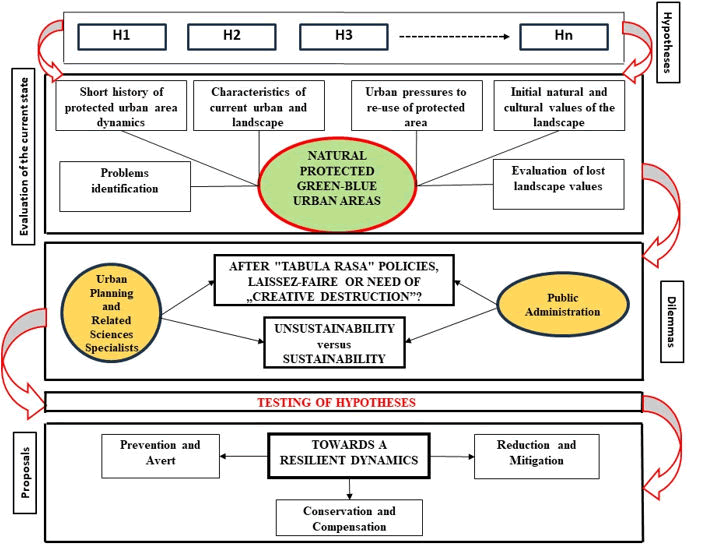
Figure 5: A general methodological way to analyse the urban protected area, affected by “tabula rasa” actions.
The radical changes and their effects demonstrate the difficult compatibility between the main environmental and built assemblages, the fragile relationships between assemblages and actor-networks, and the dynamic ways to integrate horizontally and vertically, and in a sustainable manner, the natural and human assemblages. The instability of natural and socio-material assemblages illustrated is a consequence of high variability of the relationships between natural, ideological, social, cultural, material, and political elements.
Results
An overview of main ideas expressed by the five categories of specialists reflects different comments which frequently demonstrate a convergence of perceptions. This fact creates the premises for an adequate development of defined visions and appropriate implementation policies in this complicated arena. Simultaneously, these ideas take into consideration the status of the current natural protected area, while trying to underline the necessity to take into consideration questions of limited sustainability, due to climate change effects, the land use structure and functionality of the natural ecosystem.
(H4 ) Reintegration of erased spaces requires an optimal time to action through an integrated vision for future development. Even if a huge part (80%) of this area has distinct functions, it is not a very clear and integrated vision regarding the optimal use of entire space. In addition, there have been limited public debates about the future health of the urban landscape. It is beneficial for the city to increase the built space around the old precinct of former VÄ?cÄ?reÈ?ti lake. Despite the government’s approval of the VÄ?cÄ?reÈ?ti natural park in the place of former lake, there are some questions connected with the future of this park under what a laissez-faire policy is effectively. Clearly, the technical problems of this project require deep reflection and action for increasing the resilience of a critical environment.
(H5 ) Sustainable reconstruction of such spaces should use nature-based solutions to harmonize present and future needs, integrating the historical and cultural memory of places. Inheriting an urban space with unfinished projects, and other deep changes due to the previous application of a “tabula rasa” approach it is important for a community working with government to choose the best solutions. Before search solutions, it is important to define a vision, considering the huge responsibility of decision-makers. Time is not waiting for such a vision; it is necessarily working. The result is that nature tries to replace “the inaction of the community by creating a new landscape following its own laws”. When the community wakes up the nature buildings must be used. This is the dominant response of inhabitants interviewed and of specialists [6]. Nature-based solutions should make a connection with the past, and the role of planners and stakeholders is to keep in the collective memory the symbol image of historical value destroyed by Ceausescu’ regime. This idea also coincides with the answers given by the interviewed inhabitants.
Discussion
In this section we express some critical points regarding the capacity of nature to ensure itself a full naturalization of the landscape, which shows the fragility of the entire ecosystem. At the same time, we discuss how we could increase the resilience of this new urban landscape.
Self-Naturalization Limits in the Case of the Vacareati Natural Urban Park
The park’s soil is highly fragmented by numerous concrete surfaces in several locations, while the deposition of atmospheric dust over three decades has added a superficial layer. This park also needs to have both soil with permanent humidity, and some areas with permanent water. This is because the terrace sources contribute little to ensuring permanent water in some concavities which is necessary to create conditions for a lacustrine ecosystem with specific species of vegetation, fishes, animals, birds, insects and so on. During rainy periods many concavities form small water reservoirs, but the number of lakes is reduced to a single lacustrine surface in both winter and dry summer periods. While current small lakes in the area have water from precipitation collected by concrete slopes in different concavities, there is a permanent one the lowest accumulation point in the north-eastern part of the region. That is favoured by a concrete substrate built to stop the potential infiltration to the Dâmbovia river.
The main problem of the wet sector of the park will be eutrophication processes resulting from lack of a permanent flow of fresh water which would help ensure under normal conditions an increase its biodiversity and increase the natural resilience of the park and its surroundings [7]. Another important issue potentially limiting the park’s ecosystem is its extensive concrete slope. During the summer it helps create inappropriate microclimates for the ecosystem’s sustainable natural development. In addition, torrential summer rains often contaminate water drained from the slopes with dust and garbage. This can have negative effects on various parts of the ecosystem.
Looking at the Vacareati natural park’s re-naturalization limits, the new landscape needs to be helped by the increasing its resilience capacity. The responses of the interviewees permit us to define several ways to aid the huge efforts made by nature to survive [8]. After “tabula rasa” actions the urban landscape lost its initial resilient capacity, experiencing new unfinished outcomes. Our question refers to the capacity of current natural urban park to ensure a permanent increasing of resilience or it will collapse taking into consideration that its “lives” in an artificial environment, with obvious limits of biological change. In other words, it’s about sustainability or unsustainability [9].
Conclusions
Our study reveals the difficulties of reintegrating an urban area strongly affected by “tabula rasa” interventions, and to change the initial destination of land use by an appropriate urban design. Such heritage, represented by an unfinished project, is a huge challenge for the politicians, landscape and urban planners, owners, decision-makers, and population. The effects of the tabula rasa approach created the conditions to implement one of the great urban projects in Bucharest city. This project mainly focused on the construction of an accumulation lake, in the city’ pericentral area, having a triple function: checking the water flow DâmboviÈ?a River and for navigation, improving the microclimate and population leisure.
The collapse of the project to connect Bucharest with the Danube by water way, led to the entire abandonment of an area. If the tabula rasa method deleted the space’s natural and anthropic goals, the “laissez-faire” policies applied by local authorities, amplify the local conflicts, environmental problems, criminality, human relations, and different events such vegetation fires. This long period clearly demonstrates that in such situation the community’ and authorities’ reactions should be rationale and rapid for defining an integrative vision meeting the population expectations, the most productive land use structure, and adding a real value to the city.
Lack of action, about two decades, opened the doors for different public initiatives, each of them targeting different segments of urban landscape. Without a public debated and integrative masterplan, these initiatives were defined as independent ones, less connected between them, but more and more visible at the local and national scale, too. The strongest initiative, sustained by environmental NGOs was to change the lake destination into a natural urban park, using the creation of Nature during its self-naturalization process. Formally, it was a success highlighted by government decision. Another implemented bad initiative belonged to some entrepreneurs Valorising the former Hungry Circus, unfinished by Ceausescu, and its surroundings. After that, fragment by fragment, the buffer space of the natural protection urban areas will be transformed in the residential ones.
Demonstrating that inaction of authorities and the community transforms an empty space into a less productive and functional one, with a high-risk sustainability, we underline the necessity to synergically react by bringing all stakeholders together in such cases. Working without a vision, the final landscape could be appreciated as a destructive creation. To neglect this dark perspective, the landscape planers and authorities should reflect more on the possibility to help Nature for a sustainable development of the natural protection urban area.
The limitation of the study is defined by less current examples regarding the management of long-term land abandonment, after “tabula rasa” actions in the heart of a city. Maybe further research will highlight different behaviours of the municipalities in such situation, certifying or not certifying that the “long-term abandonment policy” is the best solution for re-naturalization such land and its transformation in a natural urban protected area. Our case study, indirectly, reveals what means the indecision of the urban authorities/ communities regarding the reintegration way of such areas in the new urban development projects, and its material and immaterial costs.
Declaration Of Conflicting Interests
The author(s) declared no potential conflicts of interest with respect to the research, authorship, and/or publication of this article.
Funding
The author(s) received no financial support for the research, authorship, and/or publication of this article.
References
- Alonso Frank A, Mattioli L (2023) Implementation of sustainable development goals at the local-neighborhood scale. J Urban Reg Anal. 15(1):125-149.
[Google Scholar]
- Badiu DL, Onose DA, NiÈ?Ä? MR (2019) From “red” to green? A look into the evolution of green spaces in a post-socialist city. Land Use Policy. 187:156-164.
[Crossref] [Google Scholar]
- Baker T, McGuirk PM (2017) Assemblage thinking as methodology: commitments and practices for critical policy research. Territ Polit Gov. 5(4):425-442.
[Crossref] [Google Scholar]
- Beauregard RA (2005) From Place to Site: Negotiating Narrative Complexity.
[Google Scholar]
- Bodin Ö, Crona BI (2009) The role of social networks in natural resource governance: What relational patterns make a difference? Glob Environ Change. 19:366-374.
[Crossref] [Google Scholar]
- Bürkner HJ, Totelecan SG (2018) Assemblages of Urban Leisure Culture in Inner-City Bucharest. Int J Urban Reg Res. 42(5):786-806.
[Crossref] [Google Scholar]
- Castaño-Rosa R, Pelsmakers S, Järventausta H (2022) Resilience in the built environment: Key characteristics for solutions to multiple crises. Sustain Cities Soc. 87:104259.
[Crossref] [Google Scholar]
- Cavalcanti MB (1997) Urban reconstruction and autocratic regimes: Ceausescu’s Bucharest in its historic context. Plan Perspect. 12:71-109.
[Crossref] [Google Scholar]
- Christopher A (1986) The teaching of urban morphogenesis. Can Geogr. 30(1):53-79.
[Crossref] [Google Scholar]
Citation: Iano? I, Cr?ciun C, Sorensen A (2025) Exploring an Urban Landscape Dynamics, Affected by “Tabula Rasa� And “Laissez-Faire� Planning Policies. Br J Res. 12:128.
Copyright: © 2025 Iano? I, et al. This is an open-access article distributed under the terms of the Creative Commons Attribution License, which permits unrestricted use, distribution, and reproduction in any medium, provided the original author and source are credited.