Research Article - (2025) Volume 12, Issue 1
Balance of Payment Constraints for Green Energy Growth in the Philippines
Arjane Nicdao*,
Florinda G. Vigonte,
Marmelo V. Abante and
Ma. Cristina Estioco
Department of Environmental Chemistry, World Citi Colleges, Quezon City, Philippines
*Correspondence:
Arjane Nicdao, Department of Environmental Chemistry, World Citi Colleges, Quezon City,
Philippines,
Email:
Received: 24-Jun-2024, Manuscript No. IPBJR-24-20491;
Editor assigned: 26-Jun-2024, Pre QC No. IPBJR-24-20491 (PQ);
Reviewed: 10-Jul-2024, QC No. IPBJR-24-20491;
Revised: 06-Jan-2025, Manuscript No. IPBJR-24-20491 (R);
Published:
13-Jan-2025, DOI: 10.35841/2394-3718.12.01.121
Abstract
This systematic literature review concerns the Balance of Payment (BOP) constraints concerning green energy growth in the Philippines, specifically in solar energy development. As the Philippines seeks to diversify its energy mix and reduce dependence on imported fuels, solar energy presents a promising avenue for sustainable development. The declining cost of Solar PV significantly affected the solar market positively, and solar installations in the Philippines increased for commercial, residential, and industrial consumers. However, the transition to solar energy faces challenges in the BOP constraints, including reliance on imported solar technology and equipment. This study explores strategies to mitigate constraints, such as promoting domestic manufacturing, enhancing technology transfer, and leveraging international partnerships. This research also contributes to the understanding of BOP constraints in the context of Solar energy development. It offers actionable recommendations for policymakers, industry stakeholders, and investors to foster a robust and sustainable solar energy ecosystem in the Philippines.
Keywords
Payment; Energy; Growth; Fossil; Fuel
Introduction
The energy sector in the Philippines has relied on fossil fuels and coal-operated power plants as the main contributors to the escalating power demand due to population growth, rapid economic expansion, and a strong emphasis on digitalization. Changes in energy supply and the high risk of natural disasters are expected to continue to hinder the country's ability to fulfill its energy needs. To cope with escalating power demand, the Philippines has been shifting to Renewable Energy and aligning it with the Philippines' commitment to the Paris Agreement on reducing gas emissions in the country by almost 75% by the year 2030. To fulfill this, Republic ACT No. 9513, also known as the Renewable Energy Act of 2008, was issued to promote the development, utilization, and commercialization of renewable energy resources. The renewable energy sector is comprised of geothermal resources (14.6%/1,932 MW), solar/wind energy (1.4%; solar at 1,382 MW; wind at 443 MW), hydropower (4.1%/1,161 MW), and biomass (12.6%/759 MW) with additional capacity in the future due to both local and international companies venturing in Solar Farms projects [1-5].
The literature review of the balance of payment constraints for green energy growth in the Philippines, specifically for solar PV Installations. It is a valuable tool for assessing the potential of the energy transition concerning the current account. A well-established approach starts from the observation that economic growth in a country involves increasing imports because a part of the growing income is spent on goods from abroad. Exports are required to earn foreign currency to pay for imports. In the long term, the growth of imports a country can afford at a given rate of export growth thus defines the maximum rate of economic growth that is allowed without the balance of payments getting out of equilibrium; hence, the balance-of-payments constrained growth rate. The so-called external constraint is thus a significant obstacle to economic development.
The existing literature on green growth and the balance of payments constraints published on behalf of the International Institute of Social Studies, The Hague, encompasses the notion that green growth emphasizes environmental and climate policies that make economic activities more sustainable, contributing to higher growth in developing countries. However, more studies are needed to focus on developing energy resources in the Philippines. As a developing cana in Southeast Asia, the Philippines is also gaining an attraction on solar-powered plants, making the balance of payments present both opportunities and challenges. The lack of domestic financing, steady increase in foreign direct investment, and absence of local manufacturers create a significant imbalance in the balance of payments, as the country must pay these loans in foreign currency, leading to a higher outflow of funds.
The Philippines relies heavily on imported solar panels and equipment due to the absence of local manufacturers, who are also subject to high import taxes and duties that affect our current accounts. The need for manufacturers also helps the economy of the Philippines. With local production of solar panels, the country can take advantage of potential job opportunities and economic growth. The solar industry has the potential to create thousands of jobs, from manufacturing to installation and maintenance. However, local manufacturers still need to realize these job opportunities fully so that the country will not rely on imported goods [6-9].
The primary objective is to thoroughly examine the balance of payment constraints for green energy growth in the Philippines. Specifically, it aims to answer the following questions:
• What are the effects in socio economic growth in the Philippines of green energy growth?
• What are the programs of the government to minimize importation of goods in the nearby countries?
• What are the balance of payment constraints for green energy growth in the Philippines?
The Philippines has made significant progress in its green energy growth but still needs to work on achieving a balance of payments. The heavy reliance on imports, lack of domestic financing, and price volatility in the energy sector are some challenges that the Government must address. However, with the implementation of strategic policies, partnerships, and incentives from the government through possible development of manufacturers and local companies venturing into renewable energy, the country can overcome these constraints and achieve a sustainable balance of payments in its green energy growth [10-15].
Literature Review
The literature review on the balance of payment constraints for green energy growth in the Philippines was concluded using a systematic approach. The researcher employed a comprehensive search strategy to identify the balance of payment constraints for green energy growth, specifically for solar PV installations.
The search comprised academic databases and platforms, including but not limited to Google Scholar.
The Preferred Reporting Items for Systematic Reviews and Meta-Analysis (PRISMA) framework was utilized to ensure a transparent approach to the literature review. This framework allows the researcher to identify, select, and analyze relevant literature about balance-of-payment constraints for green energy growth in the Philippines (Figure 1).
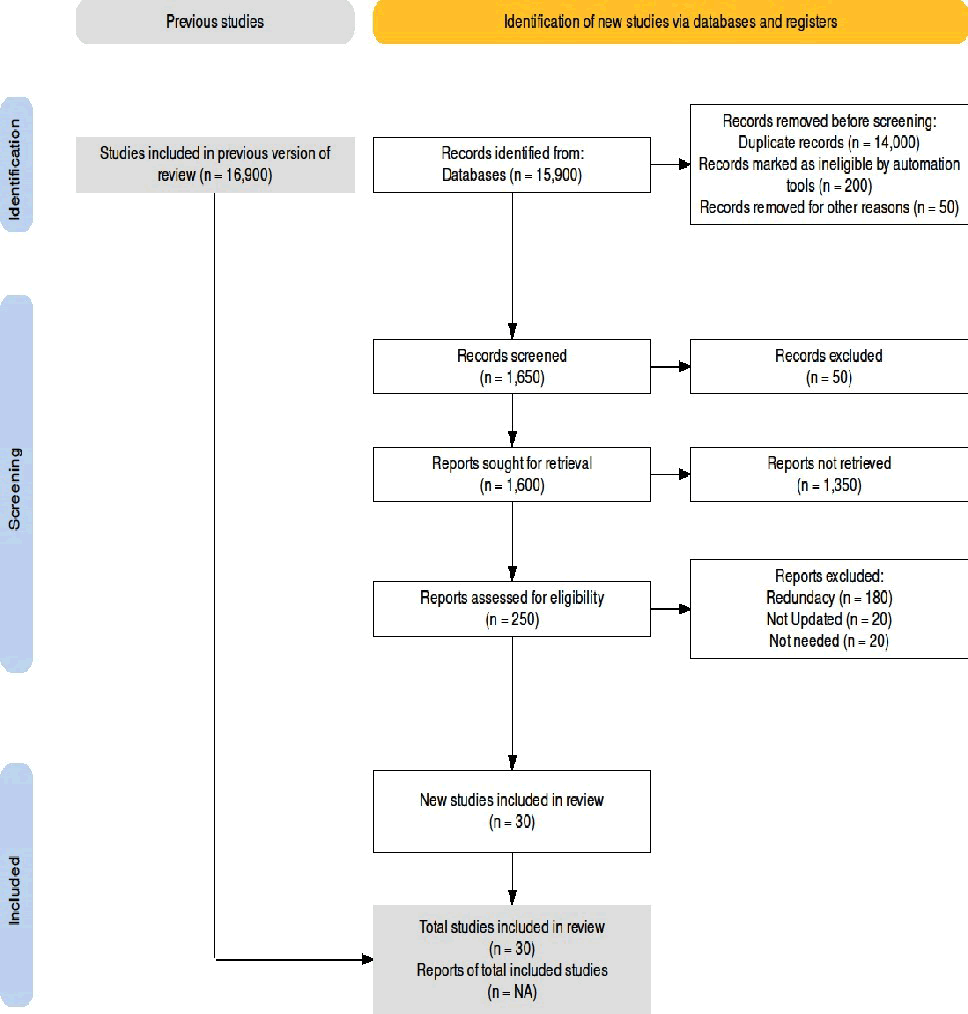
Figure 1: PRISMA diagram.
Discussion
Socio-Economic Effects
The use of solar energy resources in the Philippines has been on rise, offering not only economic benefits but also range of positive impact. Here the socio-economic benefits of the use of solar energy.
Innovation for industries: Solar energy resources provide businesses in different industries to become more self-sufficient i.e., using the generated electricity from their plant. Business can cut cost in terms of operational cost and divert it to other expenses such as research and development, in which they can create more diverse job market [16-20].
Sustainable source of energy: Solar energy eliminates reliance on fossil fuels that may eventually run out in the future.
Positive environmental impact: Solar energy reduces reduction on the carbon footprint as it does not produce greenhouse gas emissions or air pollutants that harm the environment.
Improved public health: It’s no secret that many pollutants in the air are caused by traditional energy sources like coal and oil. Fossil fuel combustion releases particulate matter like sulfur dioxide and nitrogen oxides that contribute to different kinds of illnesses including respiratory issues and heart diseases. With the shift to solar-powered systems, you can help mitigate these health risks.
Disaster recovery: Solar Power is readily available for immediate production of electricity. During disaster, people need to have access to electricity for emergencies such as charging the phones and having light at night.
Importation of Solar PV Modules and Equipment–Policy of the Government
Tariff reduction or exemption: The Philippine government has provided tariff incentives to lower the cost of importing solar PV equipment. Under the Comprehensive Tax Reform Program (CTRP), solar panels and other renewable energy equipment enjoy zero tariffs to make them more affordable and accessible.
Tax incentives: The government offers tax incentives to investors and companies engaged in renewable energy projects, including those importing solar PV equipment. These incentives may include income tax holidays, duty-free importation of equipment, and other fiscal incentives provided under the Philippine Board of Investments (BOI) and the Philippine Economic Zone Authority (PEZA).
Net metering program: The Philippines has implemented a Net Metering Program that allows solar PV system owners to offset their electricity bills by exporting excess electricity generated by their solar panels to the grid. This program provides financial incentives for individuals, businesses, and communities to invest in solar PV installations.
Feed-In Tariff (FIT) system: The government previously implemented a FIT system to provide guaranteed payments for solar PV producers for a fixed period. Although the FIT scheme has reached its capacity, it has helped stimulate investment in solar PV projects in the Philippines.
Renewable Portfolio Standards (RPS): The government has introduced renewable portfolio standards to encourage utilities and power suppliers to source a certain percentage of their energy from renewable sources, including solar PV. This policy creates a market demand for solar PV installations and incentivizes investment in renewable energy projects.
Regulatory support: The Energy Regulatory Commission (ERC) and the Department of Energy (DOE) provide regulatory support for renewable energy projects, including the importation of solar PV equipment. They streamline the permitting process and provide guidance on compliance with technical and safety standards.
Localized Initiatives: Local Government Units (LGUs) may also implement their own policies and incentives to promote solar PV installations, such as tax exemptions, streamlined permitting processes, and public awareness campaigns.
Balance of Payment Constraints–Solar Energy as Renewable Resources
Balance of Payments (BOP) is essential for understanding a country’s external economic relations, identifying constraints and vulnerabilities, and formulating effective policy responses to promote economic stability and growth in an increasingly interconnected world.
• Import dependency: The Philippines heavily relies on imported solar panels, inverters, and other components for solar energy projects. This import dependency can strain the country's BOP, as the cost of importing these technologies may outweigh the revenue generated from solar energy exports or domestic usage.
• Technology transfer costs: Acquiring solar technology often involves technology transfer agreements or licensing fees, which can lead to outflows of funds and widen the current account deficit. Negotiating favorable terms for technology transfer is crucial to mitigate these costs.
• Resource dependency: While solar energy itself does not require scarce resources, the production of solar panels relies on materials such as silicon, which may be imported. Fluctuations in resource prices or supply disruptions can impact the BOP.
• Investment flows: Foreign Direct Investment (FDI) is vital for financing solar energy projects in the Philippines. However, repatriation of profits and dividends by foreign investors can affect the BOP by leading to capital outflows.
• Export potential: The Philippines has the potential to export solar energy-related products and services, such as solar panels, installation expertise, and consultancy services, to neighbouring countries. However, tapping into export markets requires competitive pricing, high-quality products, and supportive trade policies.
• Policy and regulatory environment: The policy and regulatory environment significantly influences the BOP in solar renewable energy. Tariffs, subsidies, and trade barriers can affect the flow of solar energy equipment and services. Additionally, government incentives and regulations play a crucial role in attracting investments and promoting domestic solar energy production.
Conclusion
In conclusion, developing solar energy resources in the Philippines is linked to the nation’s Balance of Payments (BOP). While it offers a sustainable solution to energy needs and environmental concerns, its development can strain the BOP due to import dependencies, technology transfer costs, resource dependencies, investment flows, export potential, and policy environments. To navigate these challenges effectively, policymakers and stakeholders must adopt strategic measures. These may include promoting domestic production capabilities to reduce import dependencies, negotiating favorable technology transfer agreements to minimize outflows, diversifying energy sources to mitigate resource dependencies, attracting sustainable foreign direct investment, and fostering a conducive policy and regulatory environment that supports solar energy development while managing BOP concerns. Furthermore, leveraging solar energy as an exportable commodity can bolster economic growth and resilience, provided countries invest in competitive pricing, high-quality products, and supportive trade policies. Ultimately, a balanced approach that combines domestic capacity-building, international cooperation, and policy innovation is essential to harness solar energy's transformative potential while ensuring economic sustainability.
References
- Nicdao A, Vigonte F, Abante MV, Estioco MC (2024) Balance of Payment Constraints for Green Energy Growth in the Philippines.
[Google Scholar]
- Ahmed F, Kousar S, Pervaiz A, Trinidad-Segovia JE, del Pilar Casado-Belmonte M, et al. (2022) Role of green innovation, trade and energy to promote green economic growth: a case of South Asian Nations. Environ Sci Pollut Res Int. 29(5):6871-6885.
[Crossref] [Google Scholar] [PubMed]
- Akram R, Umar M, Xiaoli G, Chen F (2022) Dynamic linkages between energy efficiency, renewable energy along with economic growth and carbon emission. A case of MINT countries an asymmetric analysis. Energy Rep. 8:2119-2130.
[Crossref] [Google Scholar]
- Akram R, Chen F, Khalid F, Huang G, Irfan M (2021) Heterogeneous effects of energy efficiency and renewable energy on economic growth of BRICS countries: A fixed effect panel quantile regression analysis. Energy. 215:119019.
[Crossref] [Google Scholar]
- Balsalobre-Lorente D, Leitão NC (2020) The role of tourism, trade, renewable energy use and carbon dioxide emissions on economic growth: evidence of tourism-led growth hypothesis in EU-28. Environ Sci Pollut Res Int. 27(36):45883-45896.
[Crossref] [Google Scholar] [PubMed]
- Becker B, Fischer D (2013) Promoting renewable electricity generation in emerging economies. Energy Policy. 56:446-455.
[Crossref] [Google Scholar]
- Bhat JA (2018) Renewable and non-renewable energy consumption impact on economic growth and CO2 emissions in five emerging market economies. Environ Sci Pollut Res Int. 25(35):35515-35530.
[Crossref] [Google Scholar] [PubMed]
- Chen Y, Mamon R, Spagnolo F, Spagnolo N (2022) Renewable energy and economic growth: A Markov-switching approach. Energy. 244:123089.
[Crossref] [Google Scholar]
- Deka A, Cavusoglu B (2022) Examining the role of renewable energy on the foreign exchange rate of the OECD economies with dynamic panel GMM and Bayesian VAR model. SN Bus Econ. 2(9):119.
[Crossref] [Google Scholar]
- Eicke L, Weko S (2022) Does green growth foster green policies? Value chain upgrading and feedback mechanisms on renewable energy policies. Energy Policy. 165:112948.
[Crossref] [Google Scholar]
- Ge Y, Zhi Q (2016) Literature review: The green economy, clean energy policy and employment. Energy Procedia. 88:257-264.
[Crossref] [Google Scholar]
- Namahoro JP, Nzabanita J, Wu Q (2021) The impact of total and renewable energy consumption on economic growth in lower and middle-and upper-middle-income groups: Evidence from CS-DL and CCEMG analysis. Energy. 237:121536.
[Crossref] [Google Scholar]
- Oberholzer B (2023) Green Growth and the Balanceâ?�ofâ?�payments Constraint. Dev Change. 54(4):804-840.
[Crossref] [Google Scholar]
- Rahman MM, Sultana N (2022) Impacts of institutional quality, economic growth, and exports on renewable energy: Emerging countries perspective. Renew Energy. 189:938-951.
[Crossref] [Google Scholar]
- Rahman MM, Vu XB (2020) The nexus between renewable energy, economic growth, trade, urbanisation and environmental quality: A comparative study for Australia and Canada. Renew Energy. 155:617-627.
[Crossref] [Google Scholar]
- Siar SV, Inocencio AB, Inocencio AD, Domingo SN, Manejar AJ (2017) Philippine Institute for Development Studies. 44(2).
[Google Scholar]
- Salim RA, Rafiq S (2012) Why do some emerging economies proactively accelerate the adoption of renewable energy?. Energy Econ. 34(4):1051-1057.
[Crossref] [Google Scholar]
- Shahbaz M, Raghutla C, Chittedi KR, Jiao Z, Vo XV (2020) The effect of renewable energy consumption on economic growth: Evidence from the renewable energy country attractive index. Energy. 207:118162.
[Crossref] [Google Scholar]
- SmoloviÄ? JC, MuhadinoviÄ? M, RadonjiÄ? M, Ä�uraškoviÄ? J (2020) How does renewable energy consumption affect economic growth in the traditional and new member states of the European Union?. Energy Rep. 6:505-513.
[Crossref] [Google Scholar]
- Vural G (2021) Analyzing the impacts of economic growth, pollution, technological innovation and trade on renewable energy production in selected Latin American countries. Renew Energy. 171:210-216.
[Crossref] [Google Scholar]
Citation: Nicdao A, Vigonte FG, Abante MV, Estioco MC (2025) Balance of Payment Constraints for Green Energy Growth in
the Philippines. Br J Res. 12:121.
Copyright: © 2025 Nicdao A, et al. This is an open-access article distributed under the terms of the Creative Commons
Attribution License, which permits unrestricted use, distribution, and reproduction in any medium, provided the original author
and source are credited.